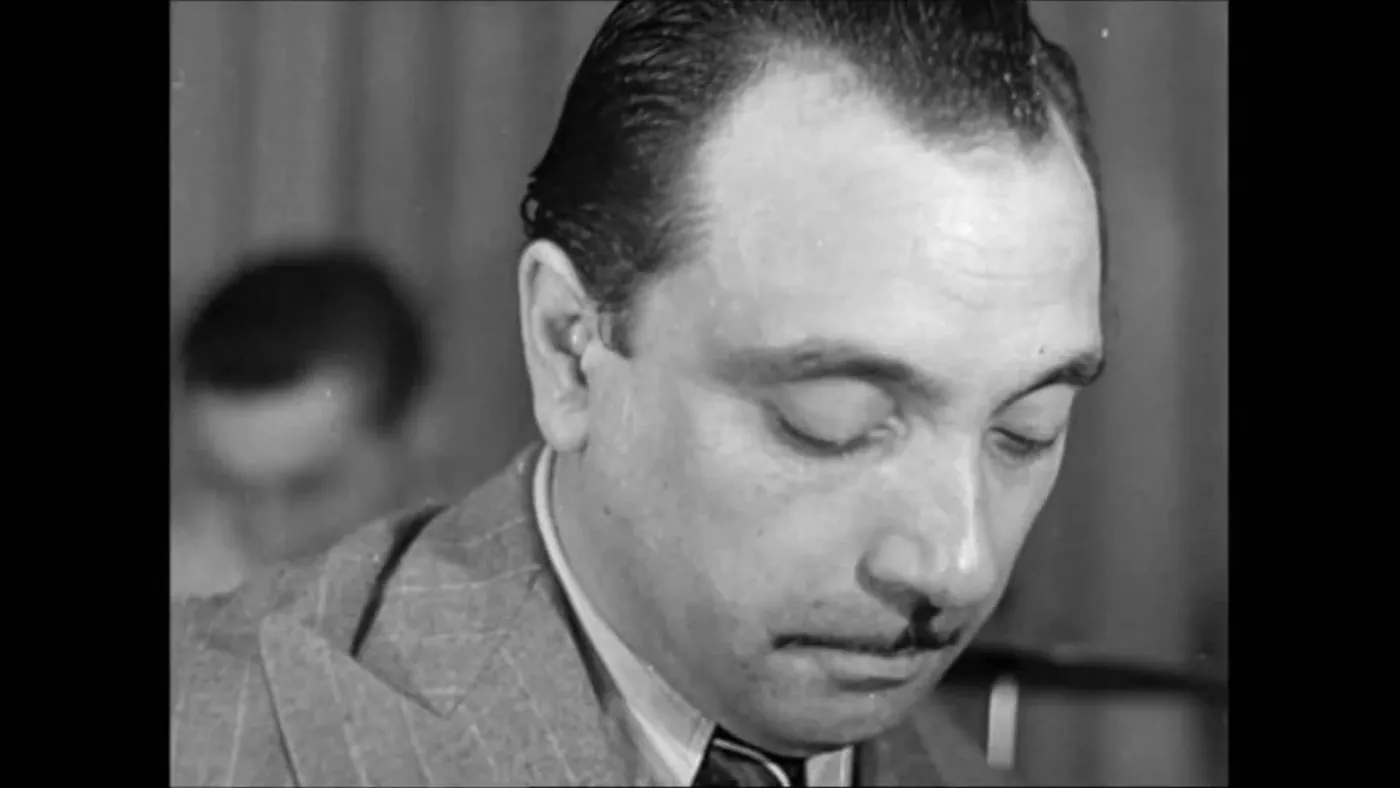
This archive gathers the surviving Django Reinhardt video material: short clips, film footage and performance recordings, with a description of each one. Use it to find existing Django Reinhardt footage from the 1930s and 1940s, the films in which he appears, and the videos where you can hear and see his guitar playing.
1932
Film “Clair de Lune” (1932) A film directed by Paul Verlaine, portraying forbidden love and artistic passion in 19th-century Paris.
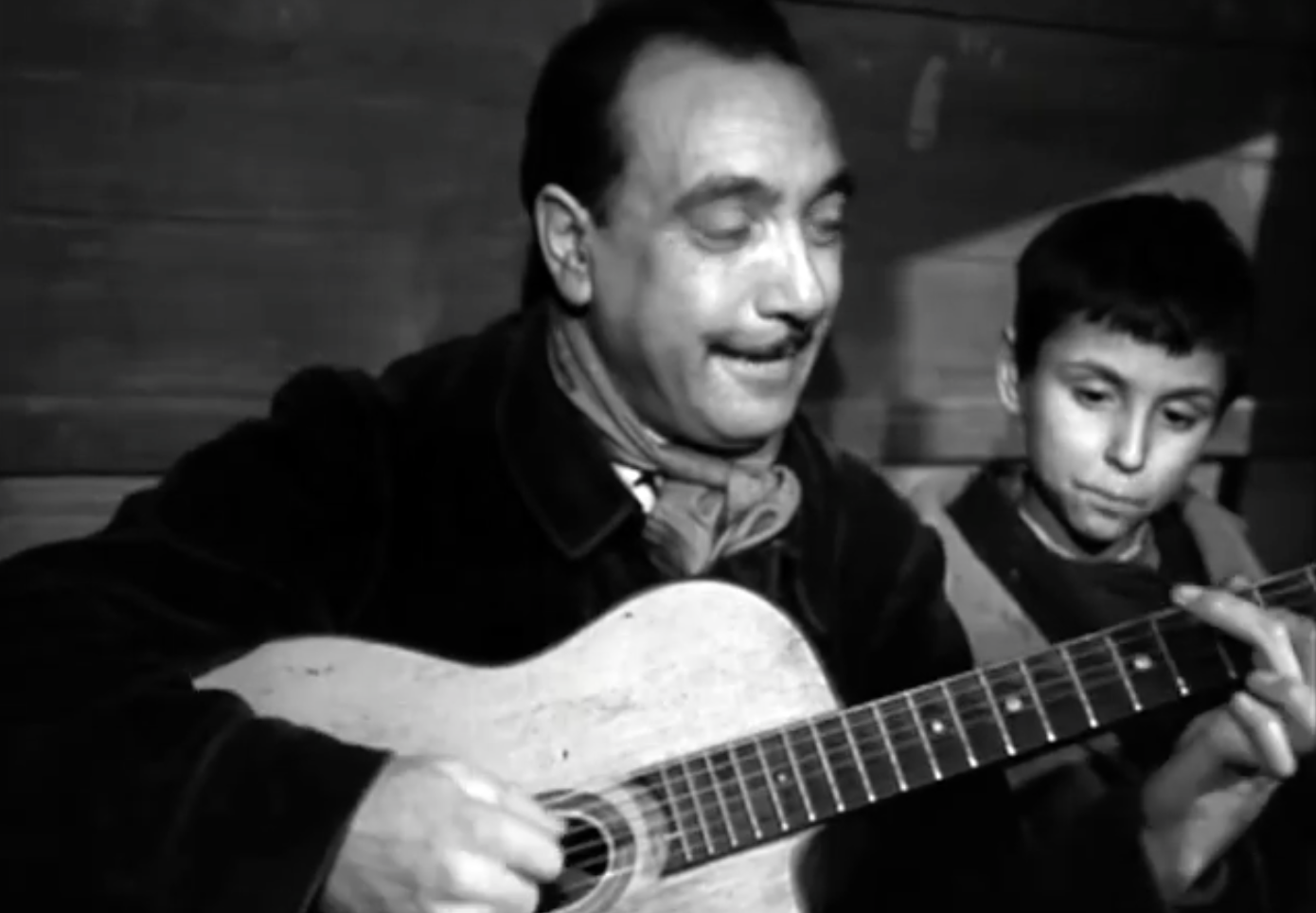
Django Reinhardt appears playing guitar on a boat (see zoom on video)


Django is using a guitar crafted by luthier Julián Gómez Rámirez, a Spanish guitar maker who immigrated from Madrid to Paris. This didnt belong to Django, it was borrowed from Pierre “Baro” Ferret.
1937
The Hague, Netherlands, Jazz Concours In Den Haag.“The Quintette du Hot Club de France” playing “Swing guitars”

Stéphane Grappelli, Joseph Reinhardt, Django Reinhardt, Louis Vola, Eugène Vées.
1938
Django Reinhardt and violinist Stéphane Grappelli, with the Quintette du Hot Club de France performing “J’attendrai” on a movie set in 1938. Produced by the British agent Lew Grade to introduce the british public the unique style of guitar- and violin-based jazz.This popular French song “J’attendrai” (In english means “I will wait,” was written by Louis Poterat, Nino Rastelli and Dino Olivieri.
This is the best surviving video footage of Django, in which we can admire his unique two-fingered fretting technique.
Also, it’s a beautiful view of the entire band, relaxed on a table, drinking, smoking, playing cards and playing together. Two more songs were recorded that day….
Django Reinhardt (guitar), Stephane Grappelli (violin), Joseph “Nin-Nin” Reinhardt (guitar), Baro Ferret (guitar), Eugene d’Hellemmes (bass)
1943
Django Reinhardt in Gent, Belgium. He played in "Theater Capitol" in 1943.In the scene, we can also see Jean Storne, Gérard Lévêque and Eugène Vees.

1944
"Django Reinhardt et son Orchestra" at "Bal Tabarin" cabaret in 1944. It located at 36, rue Victor-Massé in the 9th arrondissement, Paris, France
Django video footage playing “Echoes of France”
Witness the brilliance of Django Reinhardt in an incredible clip, showcasing his unique technique, expressive vibrato, and lightning-fast fingerwork across the fretboard. Keep an eye out for Gerard Leveque and Joseph Reinhardt in the background, adding to the magic of this unforgettable performance.
1946
“Rodéo Club” de Paris, France. May 30 of 1946. Django Reinhardt video footage playing an Epiphone electric Guitar. Eugène Vées plays Rhythm Guitar, Michel de Villers on clarinet, saxophone and sax and André Jourdan on drums. It was included in the famous Django documentary “Django Legacy” (1990) Dir. John Jeremy. Django is playing Eugène Vées's blonde Epiphone Zephyr plugged into an Epiphone Electar amplifier Zephyr Dreadnought. (Overdubbed sound "Swing 42")


Note by Teddy Dupont on Youtube:
“The significant feature of this film is that it proves Django played an electric guitar BEFORE he went to America. It is almost certain Django did not own this guitar and it probably belonged to Eugène Vées.”
1947
Django Reinhardt leaving New York. The Famous “Harry Volpe tapes” Django & Harry Volpe (8 mm), 1946This was recorded during Django’s historic US tour with Duke Ellington, filmed by renowned American guitarist Harry Volpe in NYC.
1953
Film “La Route du Bonheur” (France) “Saluti e baci” (Italy) “The road to happiness” (USA) (1h 32m)
¿Who´s outside the window? Interesting note by Teddy Dupont on Youtube. “Notice Django looking out of the carriage window as the actor gets into the train.”

“La Route du Bonheur” It’s a french-italian comedy, directed by Maurice Labro and Giorgio Simonelli. With a lot of stars in it, including, trumpeter Louis Armstrong, Sidney Bechet (Jazz saxophone and clarinet player), singer Juliette Gréco, and Django Reinhardt himself.
In this film, we have the famous Django video footage, with an overdub of “Nuits de St. Germain des Pres”, together with Hubert Folt. Even though the scene is mimed, it’s a unique opportunity to see Django`s amazing technique, his fingers and fretting hand. Also, his unique style, his face, enjoying the performance and smiling. Fast chromatic runs, bebop influence on his solo.
This Django Reinhardt video footage of django playing is also known as the “train footage”, including Django “as an actor or extra” in the window!
Corrections, suggestions and friendly comments are welcome!
Frequently asked questions
Which Django Reinhardt videos exist?
The surviving video material includes these archive entries, listed by date:
- 1932, Paris: film Clair de Lune. Django Reinhardt appears playing guitar on a boat, with a guitar by Spanish luthier Julián Gómez Ramírez, borrowed from Pierre "Baro" Ferret.
- 1937, The Hague (Den Haag), Netherlands: Jazz Concours. The Quintette du Hot Club de France plays "Swing guitars" with Stéphane Grappelli, Joseph Reinhardt, Django Reinhardt, Louis Vola and Eugène Vées.
- 1938, film set: Django Reinhardt and Stéphane Grappelli perform "J'attendrai" with the Quintette du Hot Club de France. Produced by the British agent Lew Grade. It is the best surviving footage of Django's two-fingered technique.
- 1943, Ghent, Belgium: Django Reinhardt plays at the Théâtre Capitol, with Jean Storne, Gérard Lévêque and Eugène Vées in the scene.
- 1944, Paris: "Django Reinhardt et son Orchestra" at the Bal Tabarin cabaret, 36 rue Victor-Massé, 9th arrondissement. The clip includes "Echoes of France".
- 30 May 1946, Rodéo Club de Paris: Django plays an electric Epiphone, which was Eugène Vées's blonde Epiphone Zephyr. The footage is included in the documentary Django Legacy (1990, dir. John Jeremy).
- 1946, New York: 8 mm footage filmed by guitarist Harry Volpe during Django's US tour with Duke Ellington. These are the "Harry Volpe tapes".
- 1953, film La Route du Bonheur: a French-Italian comedy (released as Saluti e baci in Italy and The Road to Happiness in the USA, 1 h 32 min), directed by Maurice Labro and Giorgio Simonelli. Django appears in the scene known as the "train footage".
Where and when were the Django Reinhardt videos filmed?
Paris, The Hague, Ghent, New York and a film set between 1932 and 1953. The earliest entry is the 1932 film Clair de Lune, and the latest is the 1953 film La Route du Bonheur. Each entry above states the place and date, and each one has its own short video or still on this page.
Where can I watch Django Reinhardt footage?
Each entry on this page includes a short video or a still, with a caption that gives the context, so you can watch the footage directly here.
Are these the only Django Reinhardt films?
No. This list covers the most accessible video material. Other performances and films may exist in archives and collections.