History of Gypsy Swing in Argentina by Ricardo Pellican
Oscar Alemán was born in Machagai, Chaco Province, Argentina, on February 20, 1909. Like Django Reinhardt, he also led an itinerant life, but not for cultural reasons; it was circumstance. He was orphaned in Brazil as a boy of under nine, and from there began a wandering life that led him in 1932 to perform with Josephine Baker's orchestra, while absorbing the world of jazz that toured Europe. There he discovered Django Reinhardt, listened to him, and was captivated by his music. When he returned to Argentina in 1941 he brought with him the novelty of Gypsy Swing, not as imitation but filtered through his own personality, which opened a particular door for the style that has multiplied its spaces to this day.
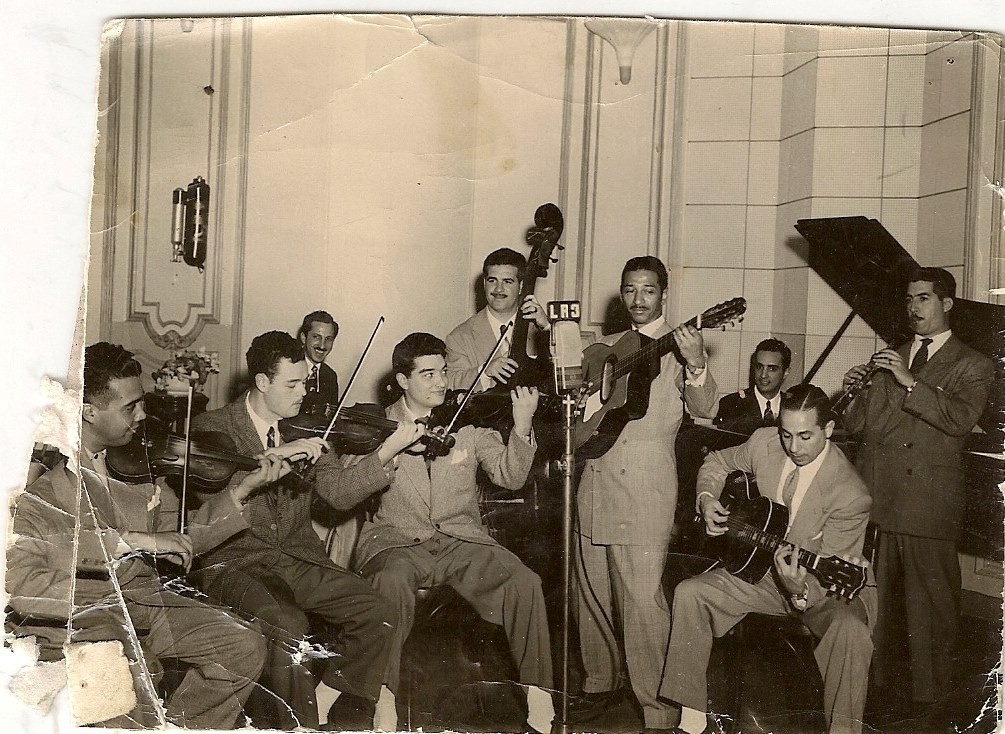
Oscar Alemán on Radio Belgrano, 1943
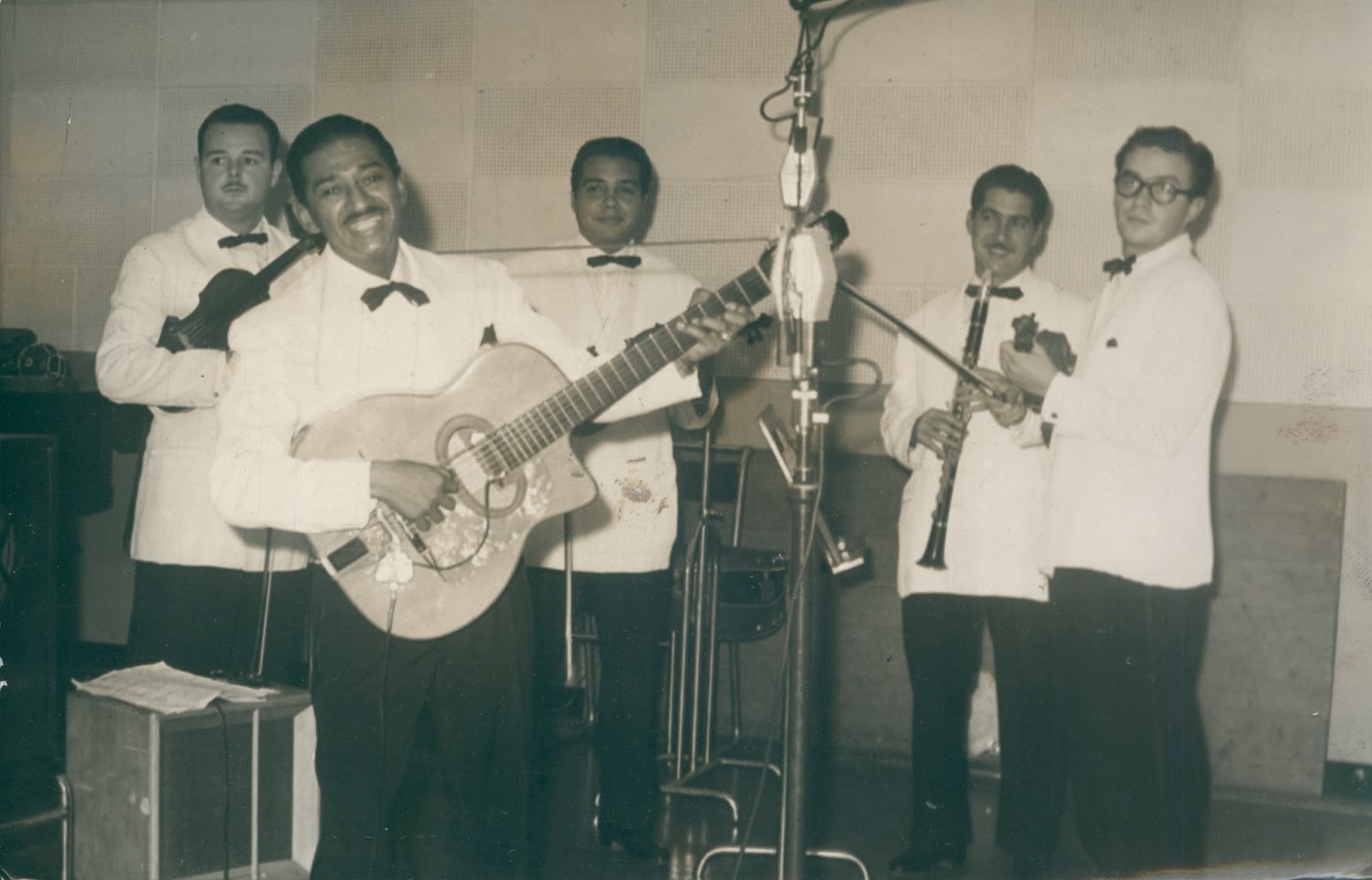
Oscar Alemán and his quintet
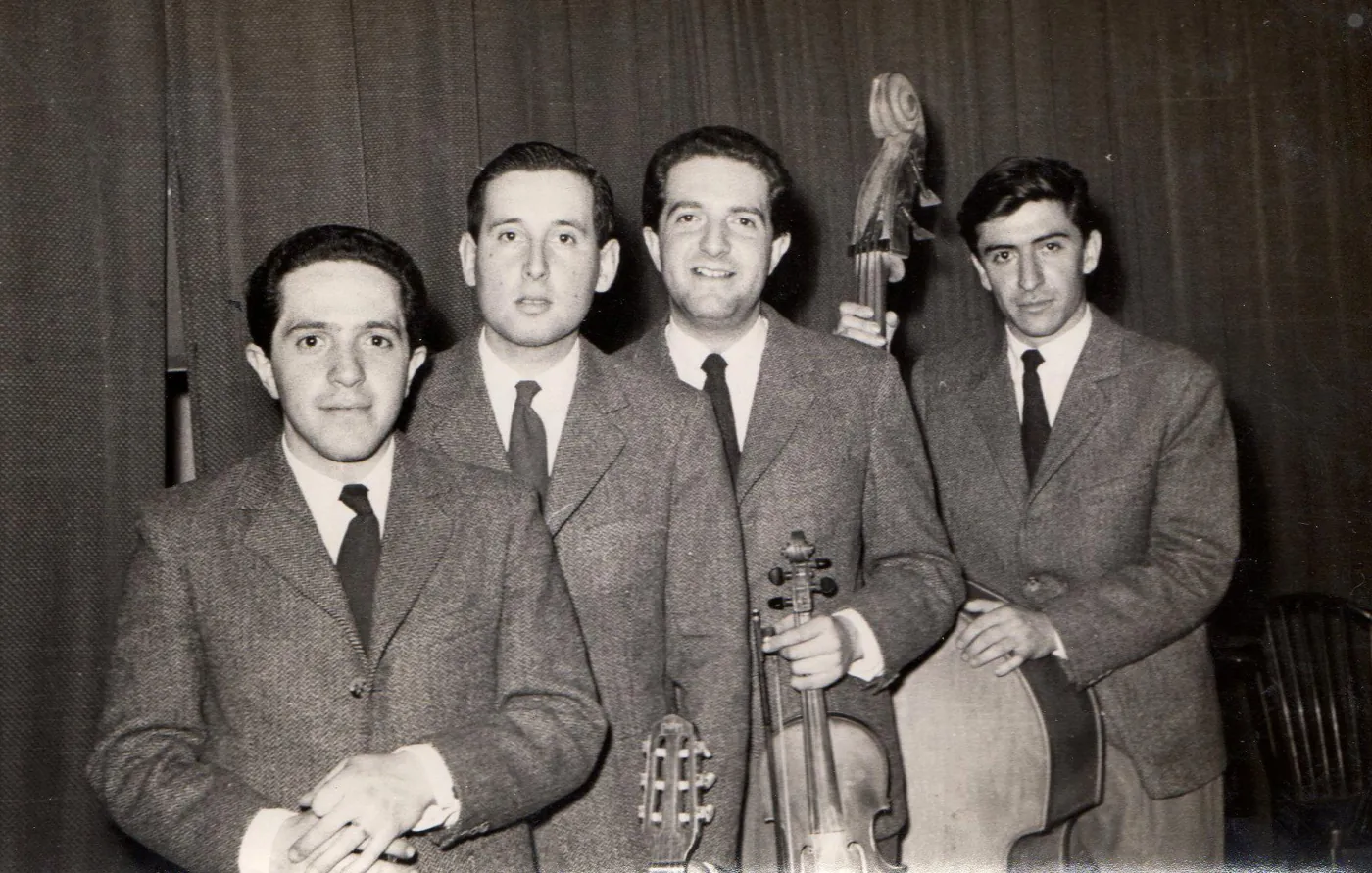
The whole of the 1940s and much of the 1950s was sustained by Oscar Alemán, joined by violinist Hernán Oliva and later by guitarist Jorge Lagos and the brothers Luis and Manuel Gabinovich, among others.
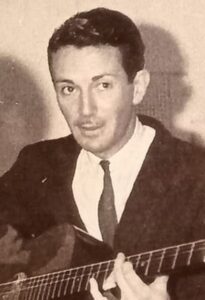
Jorge Lagos
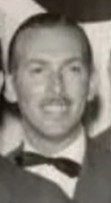
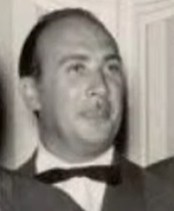
Luis Gabinovich and Manuel Gabinovich
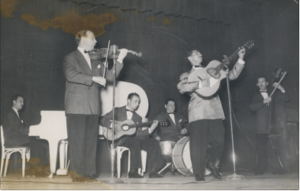
His second quintet in Argentina (1942–1949). Oscar was a sextet, but they presented themselves as "OA y su quinteto" (OA and his quintet). Manuel Gavinovich on violin, Rogelio Robledo on piano, Guillermo Barbieri on rhythm guitar, Luis Gavinovich on bass and Caravaca on drums. (Photo: Hernan Gaffet)
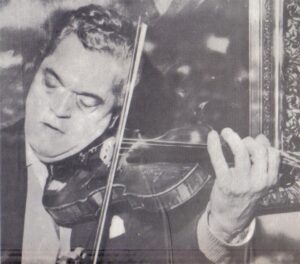
Hernán Oliva arrived in Argentina from Chile when he was very young (only 20). A violinist of great quality and virtuosity, he joined Oscar Alemán and they tried to form a group; they succeeded, although they stayed together only a few months, leaving few recordings. From then on Oliva played with other musicians, and in the 1970s he formed his own quintet with guitarist Eduardo Ravera.
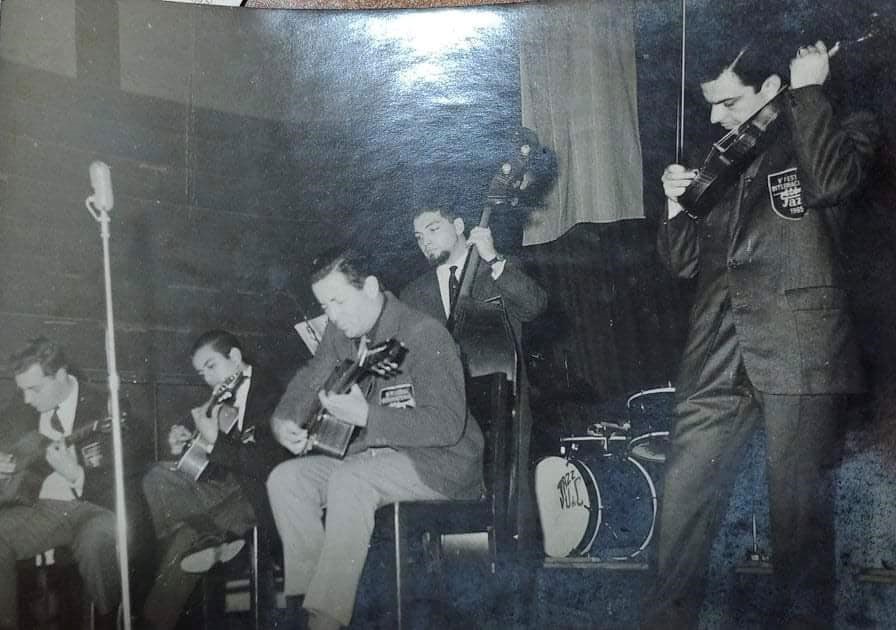
For his part, Jorge Lagos lived in France for a time during the 1950s, feeding on Django's music up close, and then returned to spread his own style here. On his return he formed "Jorge Lagos y sus Hot Four", made up of Abel Lescano on rhythm guitar, Alfonso Ferramosca on clarinet, Jorge Boetto on double bass and drummers Jorge Cichero or Jorge Padín. With this line-up he recorded, in 1957, the album "BIENVENIDO MR. JAZZ" on the ODEÓN label.
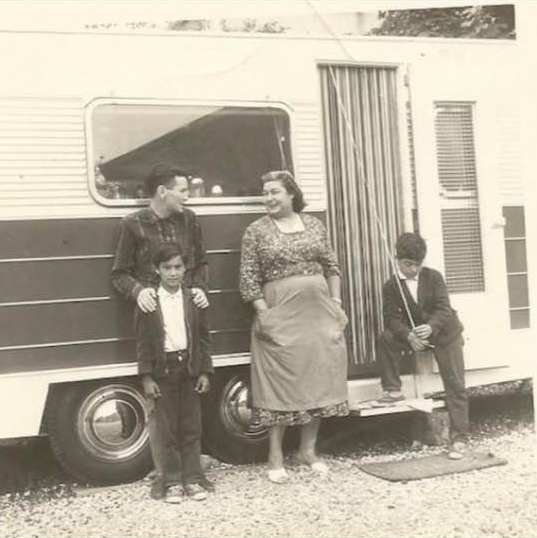
Jorge Lagos with Naguine (Django Reinhardt's wife)
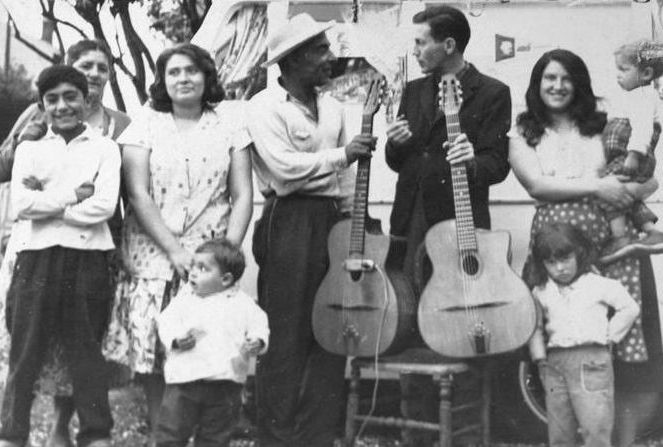
Jorge Lagos in France with Eugène Vées (guitarist of the Quintette du Hot Club de France, alongside Django Reinhardt).
During that period (the early 1960s) he performed on Buenos Aires radio, notably in a set with a trio formed alongside two young guitarists: Walter Malosetti (22) and Rubén "Baby" López Fürst (17). They would open a new stage from the 1970s on, after the great gap of the 1960s.
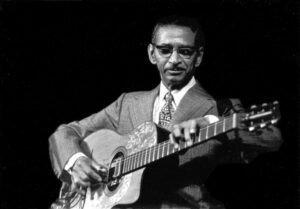
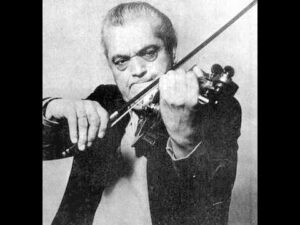
Until then, Gypsy Swing in Argentina was still a marginal space, since its great exponents (Alemán and Oliva) did not keep it as the exclusive focus of their repertoire but mixed it with many other genres. It was also an atypical expression within jazz, both because of its acoustic nature centred on guitars and because it did not come from the centrality that jazz produced in the United States had.
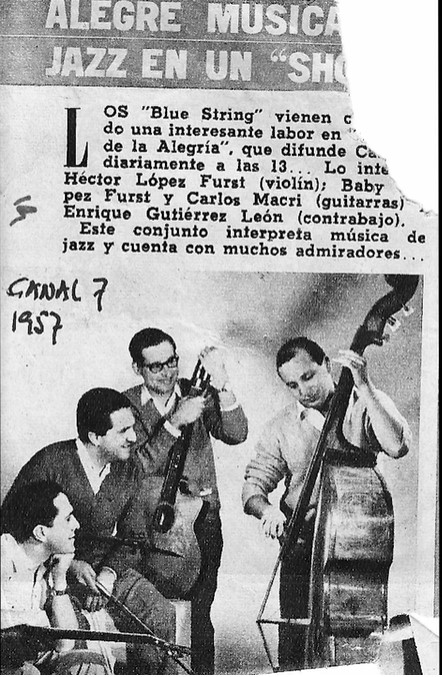
The López Fürst brothers (Héctor, Baby and Lito) formed "Los Blue Strings", which approached the style with a more modern tendency.
"Los Blue Strings" Baby López Fürst, Héctor López Fürst, Carlos Cacho Macri, Walter Malosetti, Carlos Constantini, Quique Gutiérrez de León.
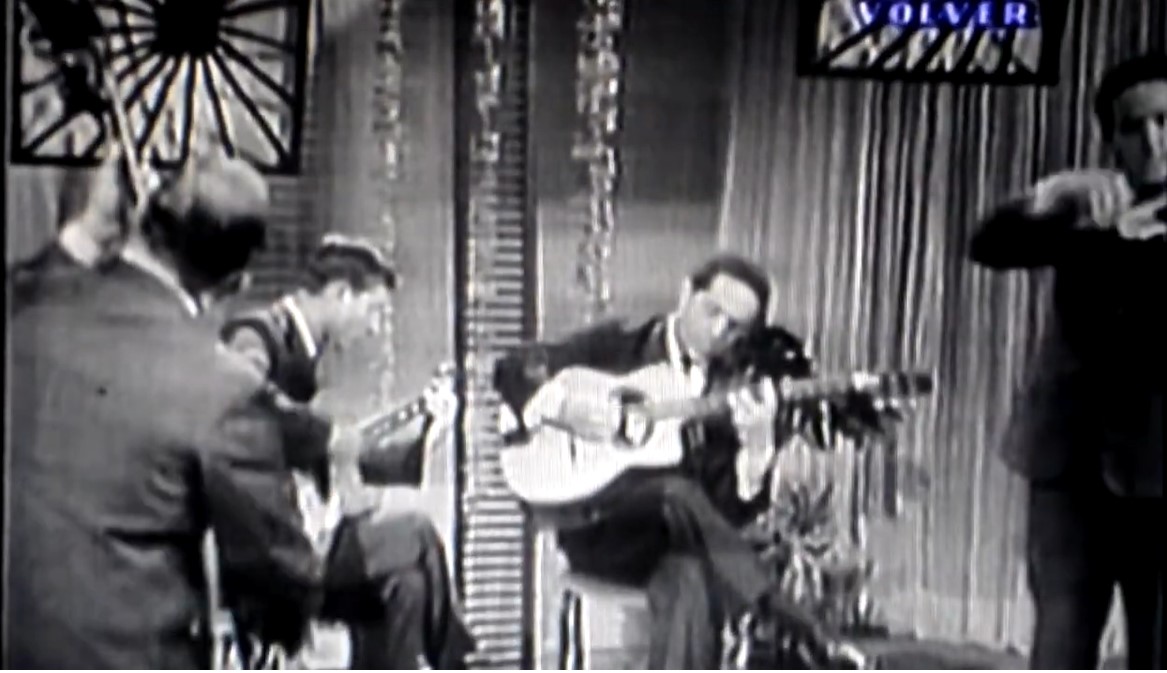
Los Blue Strings on Argentine TV, playing "Love Letters" (Victor Young). Shared by Carlos Guaragna on YouTube.
Another line-up of The Blue Strings was: Héctor López Fürst (violin), Rubén Baby López Fürst (lead guitar), Bernardo Birenbaum (rhythm guitar), Enrique Gutiérrez de León (double bass).

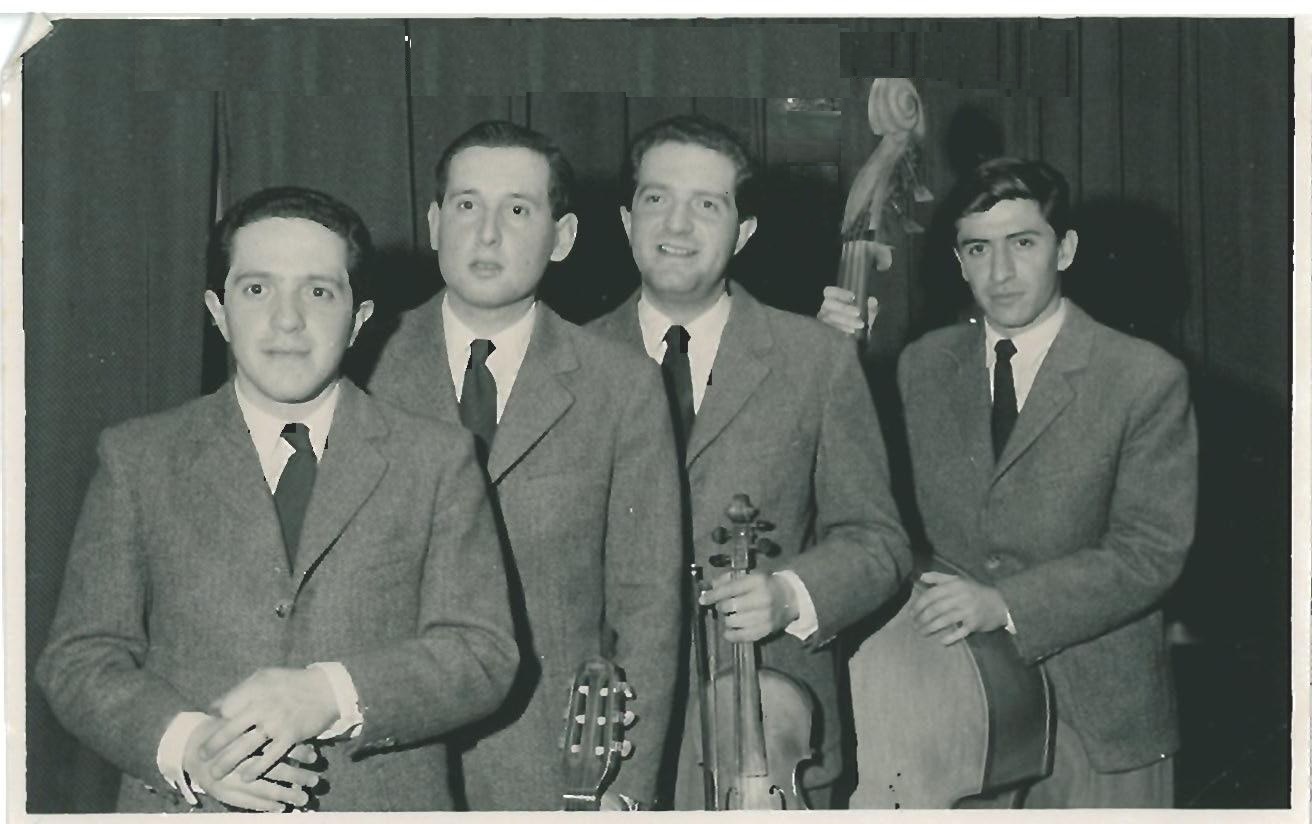
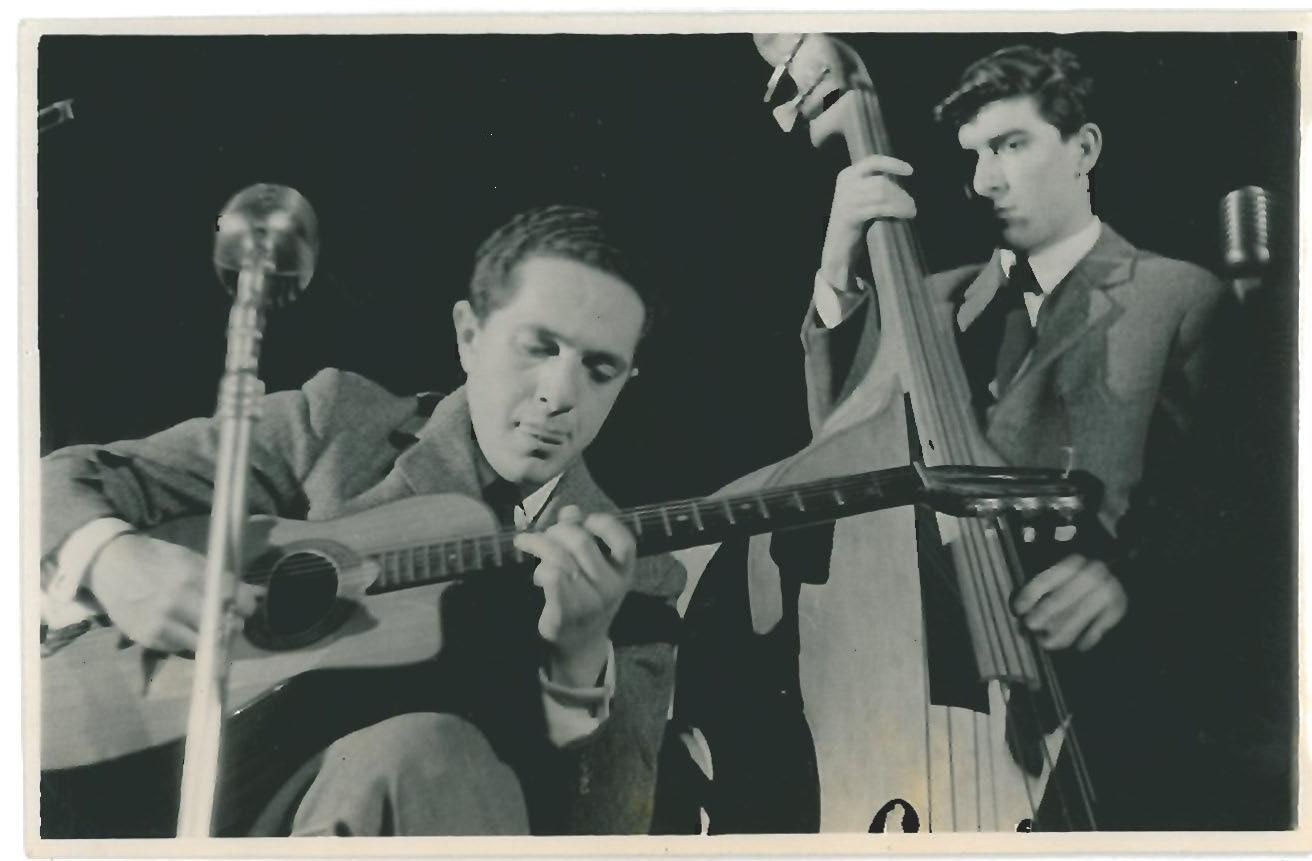
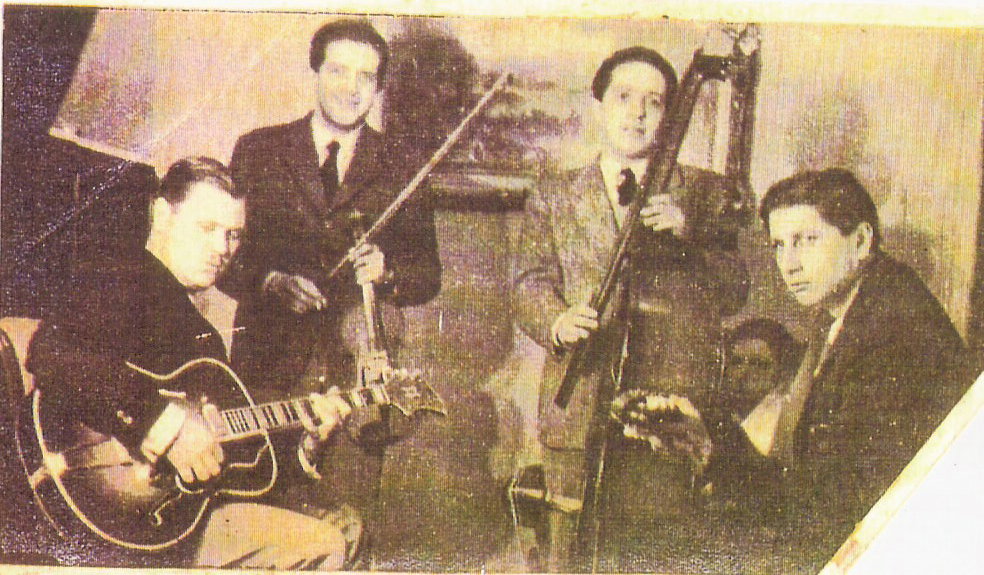
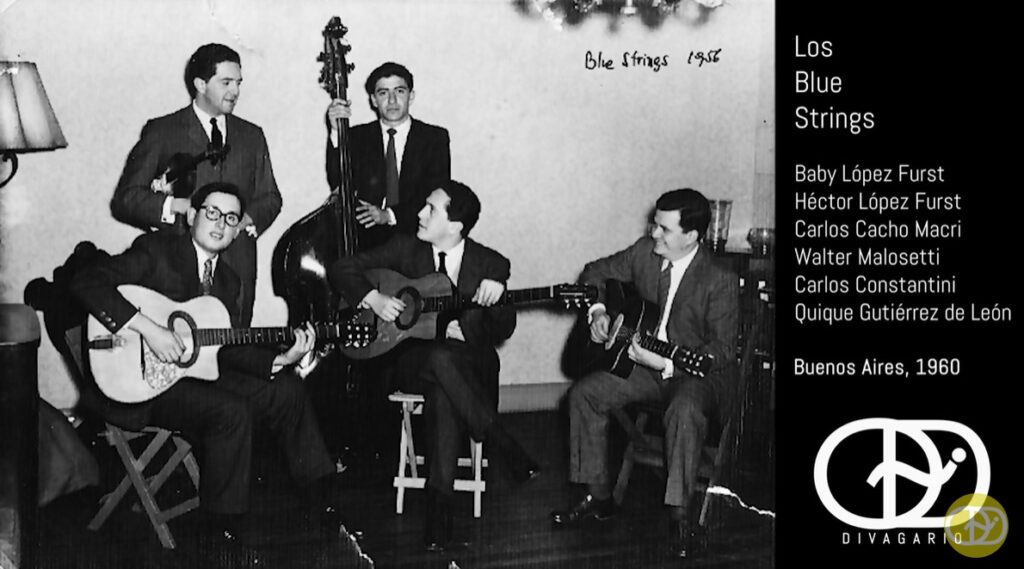
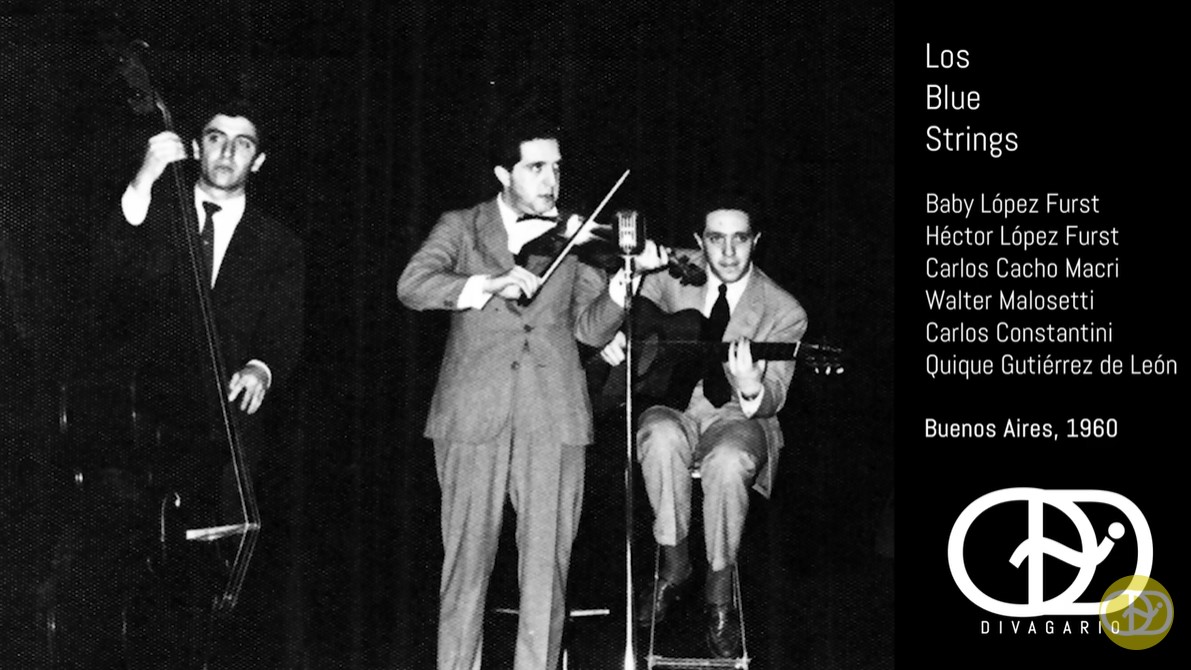
Photos: source, Canal Divagario on YouTube.
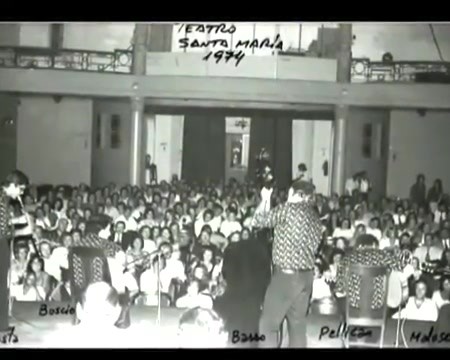
Walter Malosetti launched "Swing '39" together with Héctor Basso and Carlos Acosta, joined very briefly by Marcelo Buscio and Carlos "Chachi" Zaragoza, until he was replaced by Ricardo Pellican, aged 16, given his other work as a guitarist (together with Eduardo "Zurdo" Ravera) in Hernán Oliva's quintet.
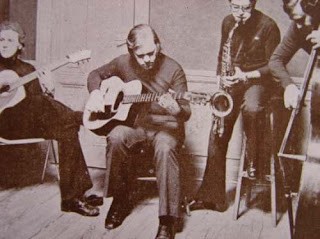
Swing 39 live at Teatro Santa María del Buen Ayre, 1974
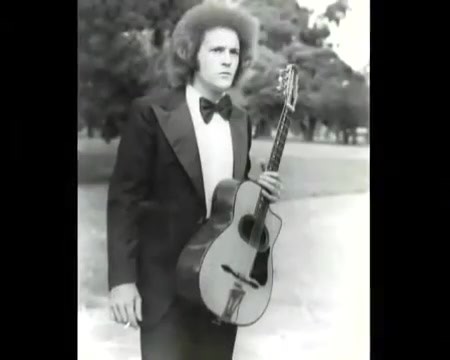
Ricardo Pellican
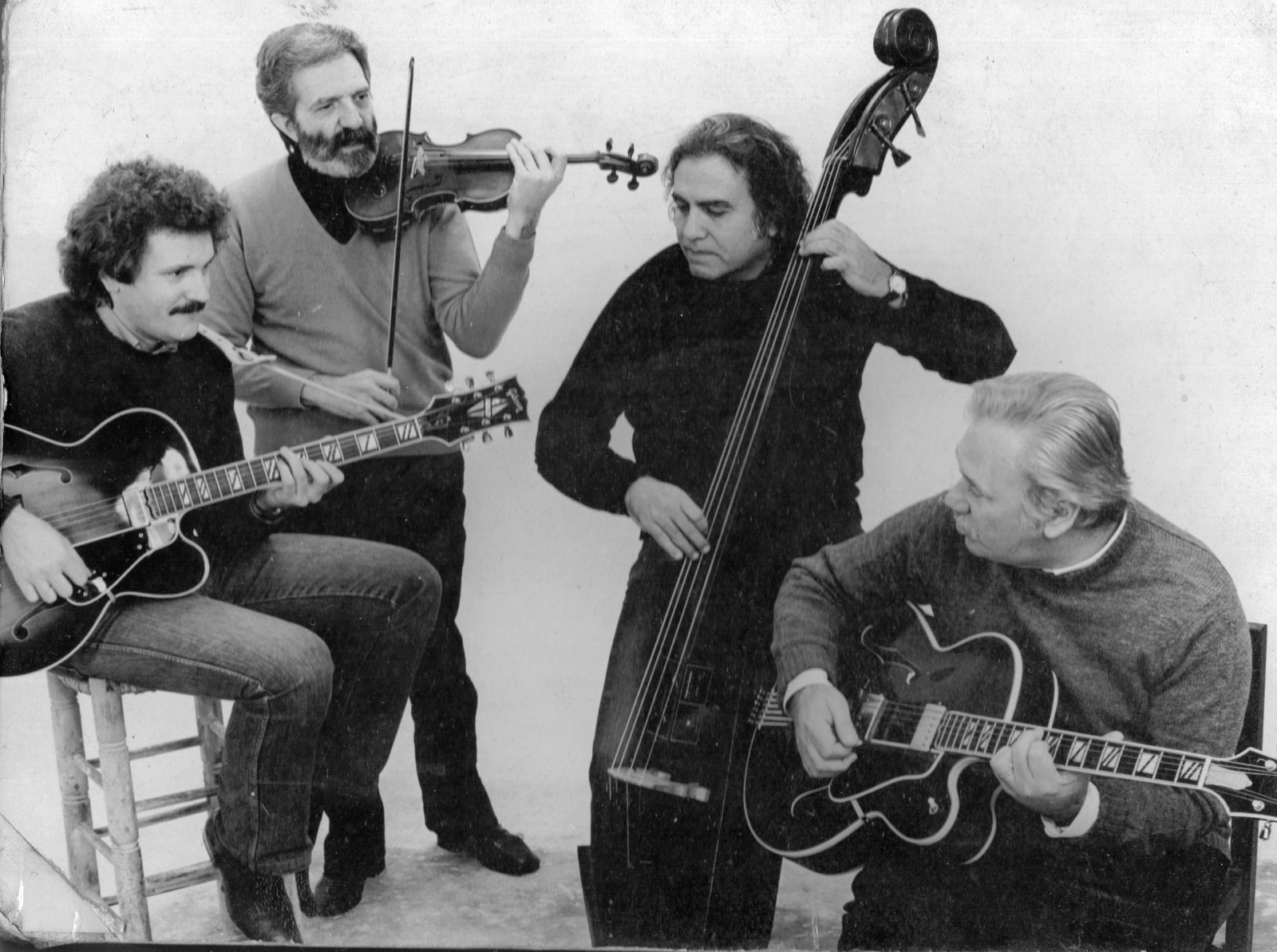
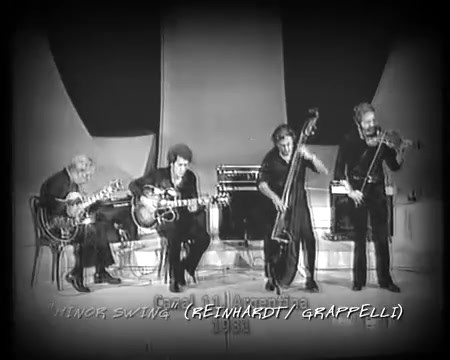
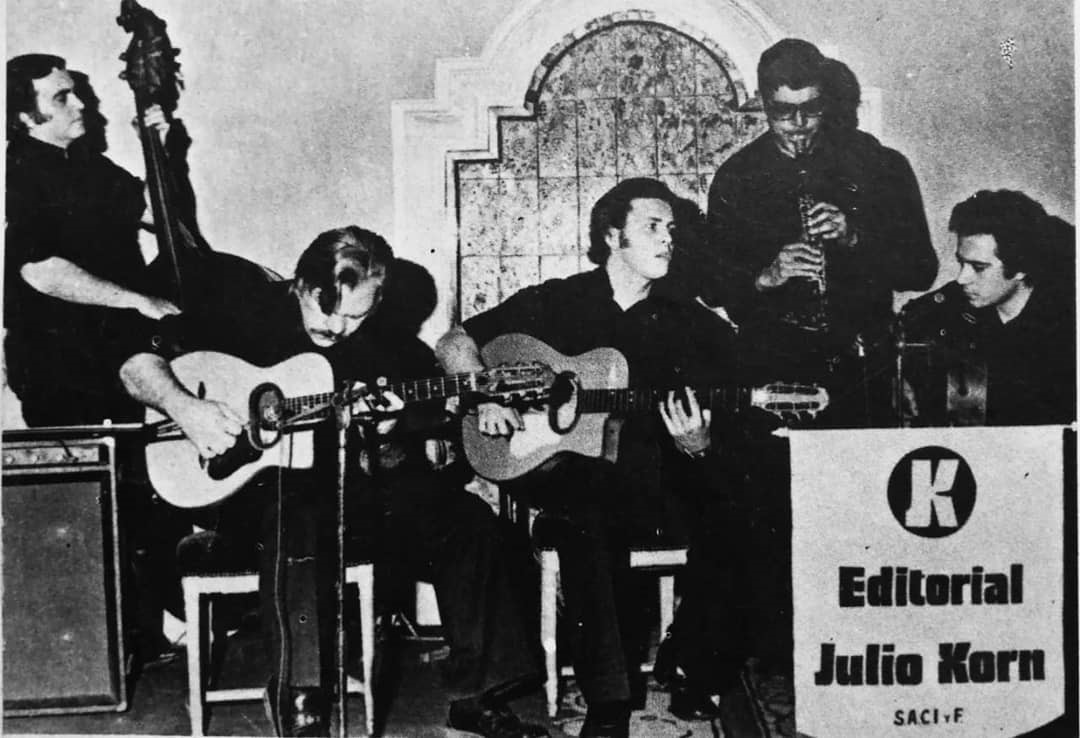
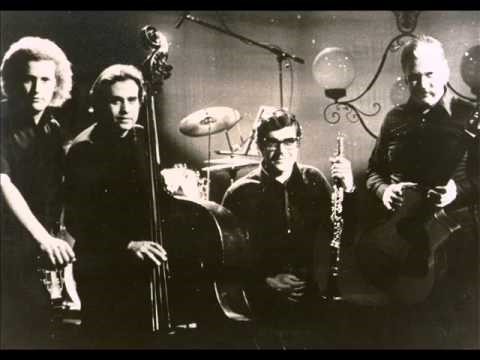
"Swing 39", playing "Minor Swing". Program: "Sonrisas 11", September 1981. Host: Marty Cosens (singer).
These three groups dominated the 1970s and already did so with great success, with occasional appearances by Oscar Alemán and his quintet (among the young musicians who sometimes joined his group we can mention Raúl Barrientos and Ricardo Pellican).
Hernán Oliva Quintet
Eduardo Ravera - Carlos "Chachi" Zaragoza - Hernán Oliva - Raúl Barrientos - Gustavo Masellis
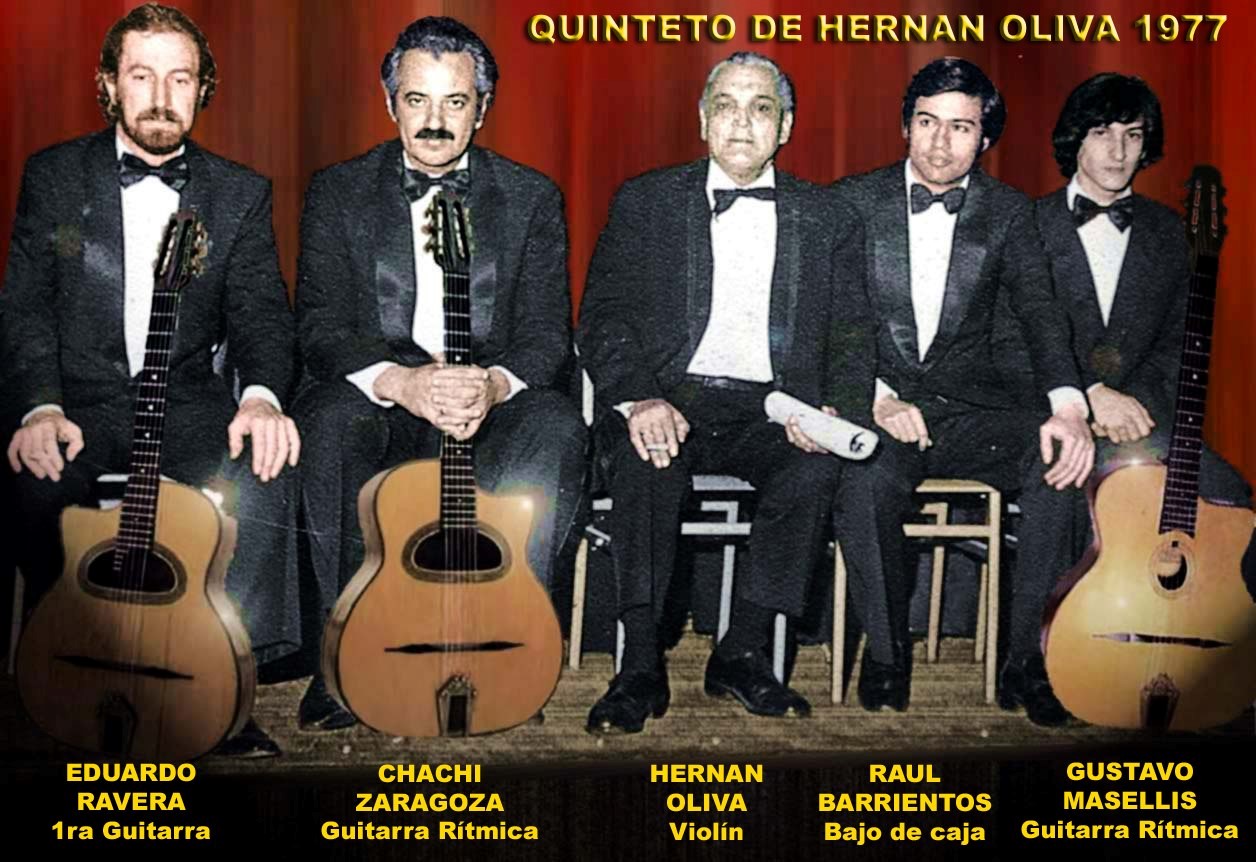
Video of the "Quinteto Hernán Oliva" on the programme "Homenaje" (1988, a few months before Oliva's death) hosted by Juan Carlos Mareco on Canal 13, Buenos Aires. Source: Carlos Guaragna.
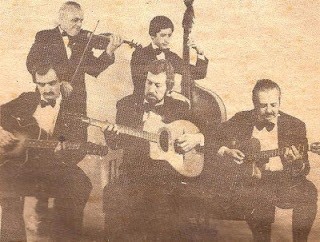
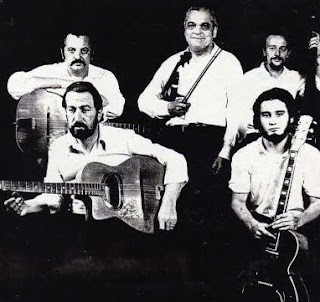
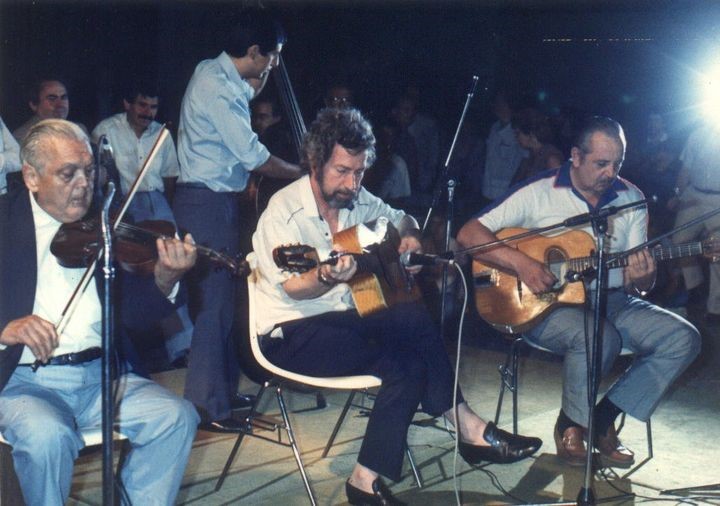
Oscar Alemán and his quintet in the late 1970s and 1980
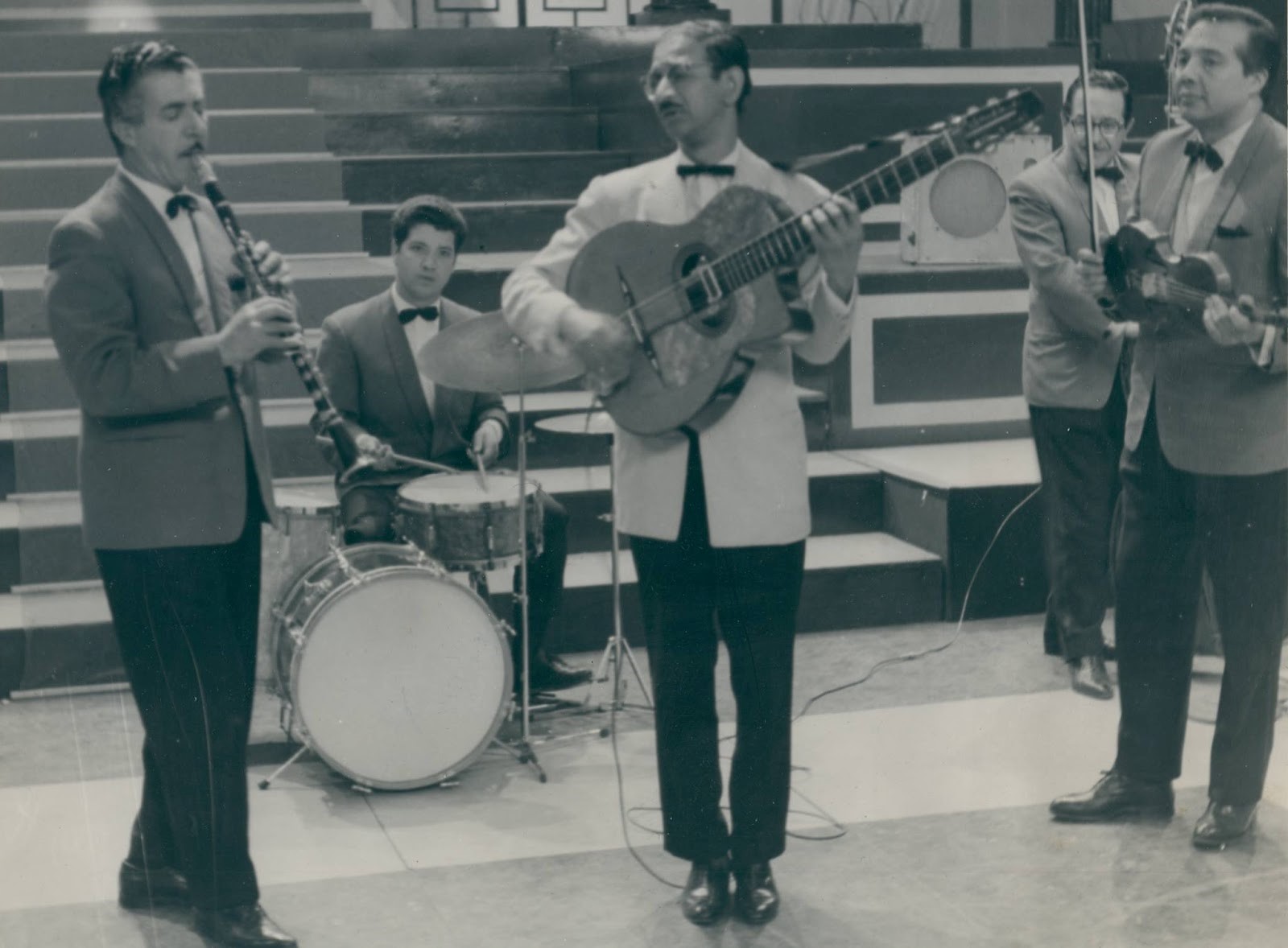
During the 1970s Oscar had a strong presence on television. He appeared on Pipo Mancera's "Sábados Circulares", on the programme "Sábados Continuados" with Leonardo Simmons, on Roberto Galán's show and on Pinky's show, all with very high ratings peaks. Oscar performed every day, which makes it all the more surprising that there is no video record. Below is a clip without audio, uploaded to YouTube by a company that sells archive material.
Oscar Alemán, "Siesta" programme by Víctor Sueiro (1975), WITHOUT ORIGINAL SOUND.
CARLOS "CHACHI" ZARAGOZA
From 1984 to 2002 Chachi Zaragoza coordinated an annual meeting within the "Jazzología" cycle of the Centro Cultural San Martín in Buenos Aires, called "Festival de las cuerdas gitanas del Jazz Argentino" (Festival of Gypsy Strings of Argentine Jazz).
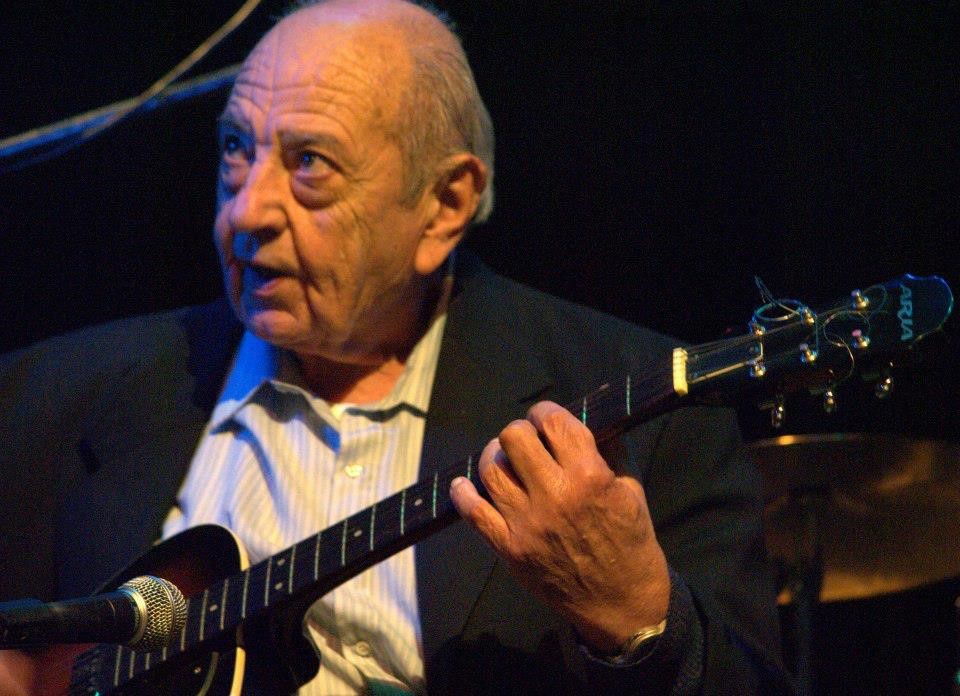
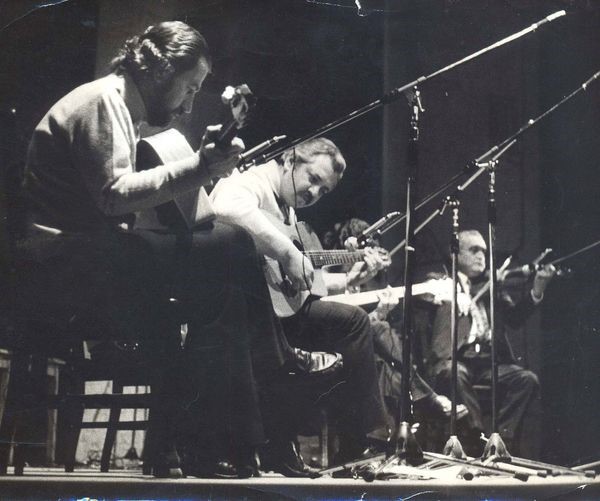
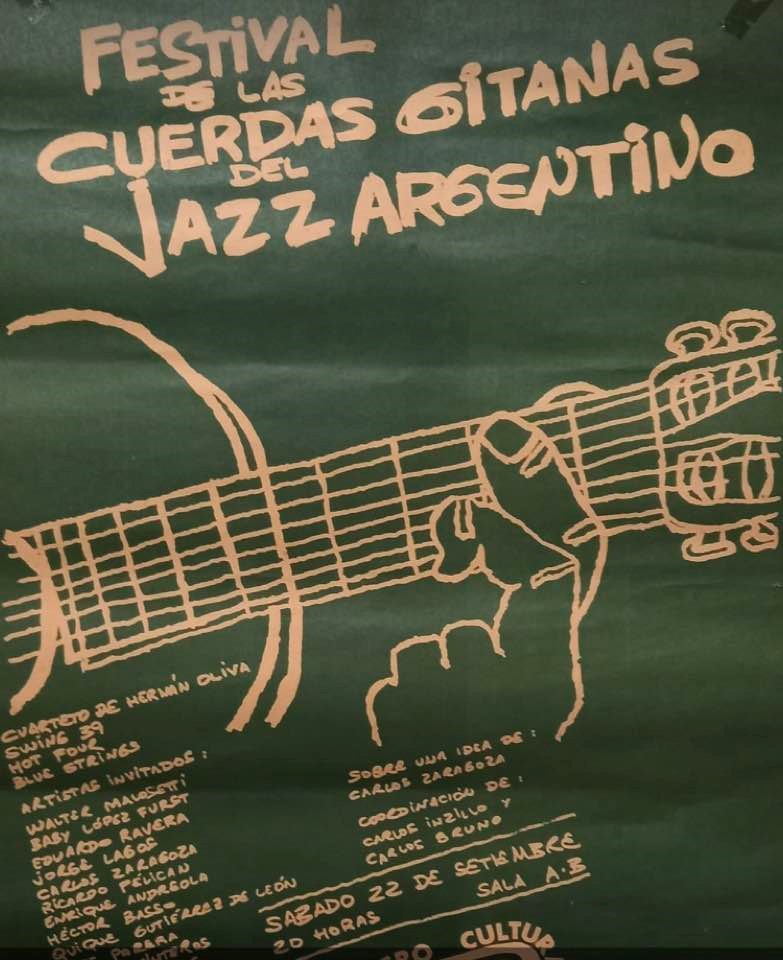
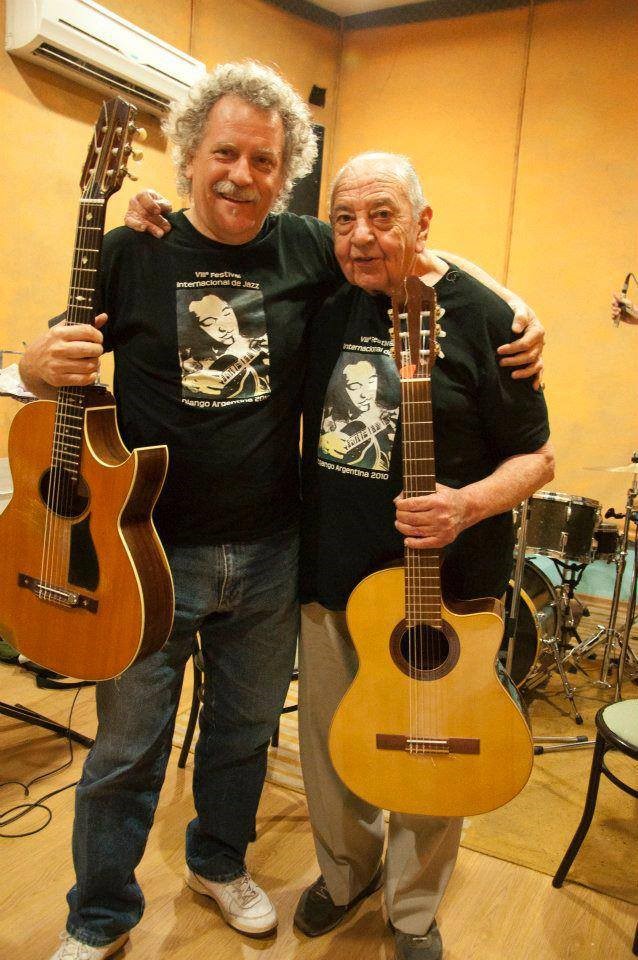
Ricardo Pellican and Carlos "Chachi" Zaragoza
"Swing 39" and "Hot Club 4"
Later, somehow, things merged: Héctor López Fürst joined "Swing '39" (in place of clarinetist Carlos Acosta), and that change shaped what would become the group that kept the flame alive in the 1980s, once the 1970s ensembles dissolved: "Hot Club 4", with Héctor López Fürst and Ricardo Pellican, which performed between 1987 and 1994, becoming a bridge between the old and the new generation.
Swing '39 presenting its album no. 6: "Recital", 31/08/1983, the cellar of the "Café Tortoni" in Buenos Aires.
Sweet Georgia Brown. Swing '39: Walter Malosetti, Ricardo Pellican, López Fürst, Basso. 1981, Canal 9
From that moment, the late 1980s, Ricardo Pellican became the most important builder of the style in Argentina, not only through his own performances and different groups, but because he began to receive students who sought him out to learn the style.
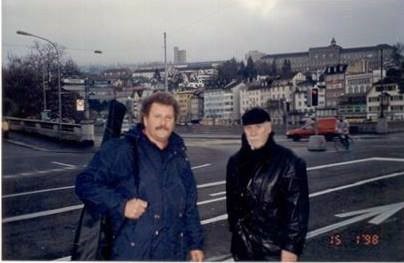
Ricardo Pellican and Walter Malosetti, Zurich 1998, European tour.
Ricardo Pellican
With more than fifty years on the national and international jazz scene, he has recorded more than 40 jazz CDs. He takes part in major jazz festivals in South America, Europe and Africa, performing with his groups and teaching workshops.
He has played with major figures of jazz, such as Oscar Alemán, Walter and Javier Malosetti, Jim Hall, Joe Pass, Herb Ellis, Hernán Oliva, Wild Bill Davison, Maurice Ferret and Joseph Pouville, Alphonso Johnson, Paquito D'Rivera, Svend Asmussen, Danilo Pérez, Didier Lockwood, Gail Winters, Héctor and Rubén "Baby" López Fürst, Panchito Cabrera, Jon Larsen, Jacopo Martini, "Chachi" Zaragoza, Bina Coquet, Gustavo Orihuela, Bjarke Lund, Sandro Haick, Ricardo Lew, Roberto "Fats" Fernández, Camilo Morales, Juan Cruz De Urquiza, Francisco Rivero, Jorge Navarro, Chivo Borraro, Luis Salinas, Ignacio Berroa, Horacio Larumbe, Néstor Gómez, Marcelo Cigano, Florian Cristea, Horacio "Chivo" Borraro, Jorge "Negro" González and Danilo Pérez, among others.
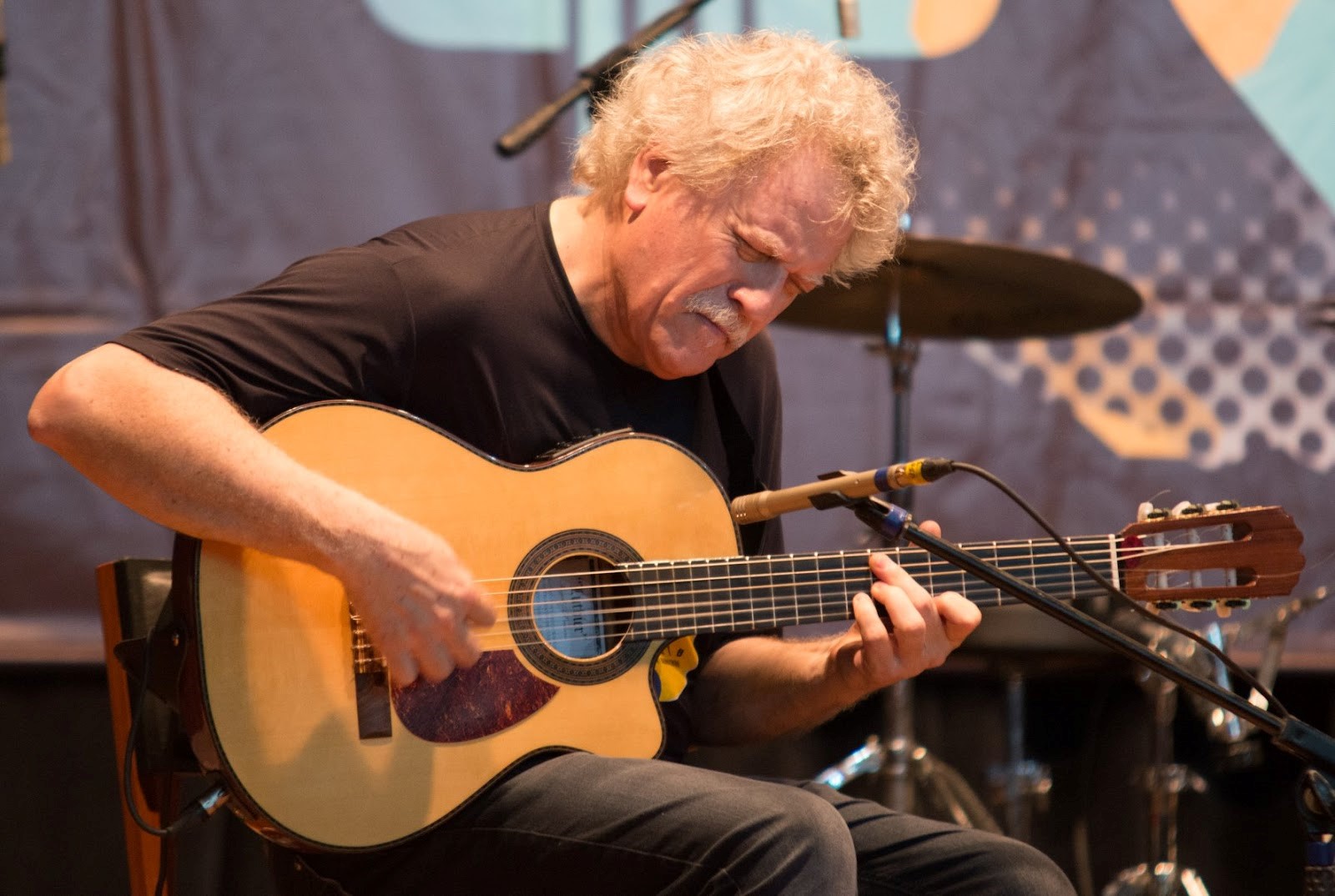
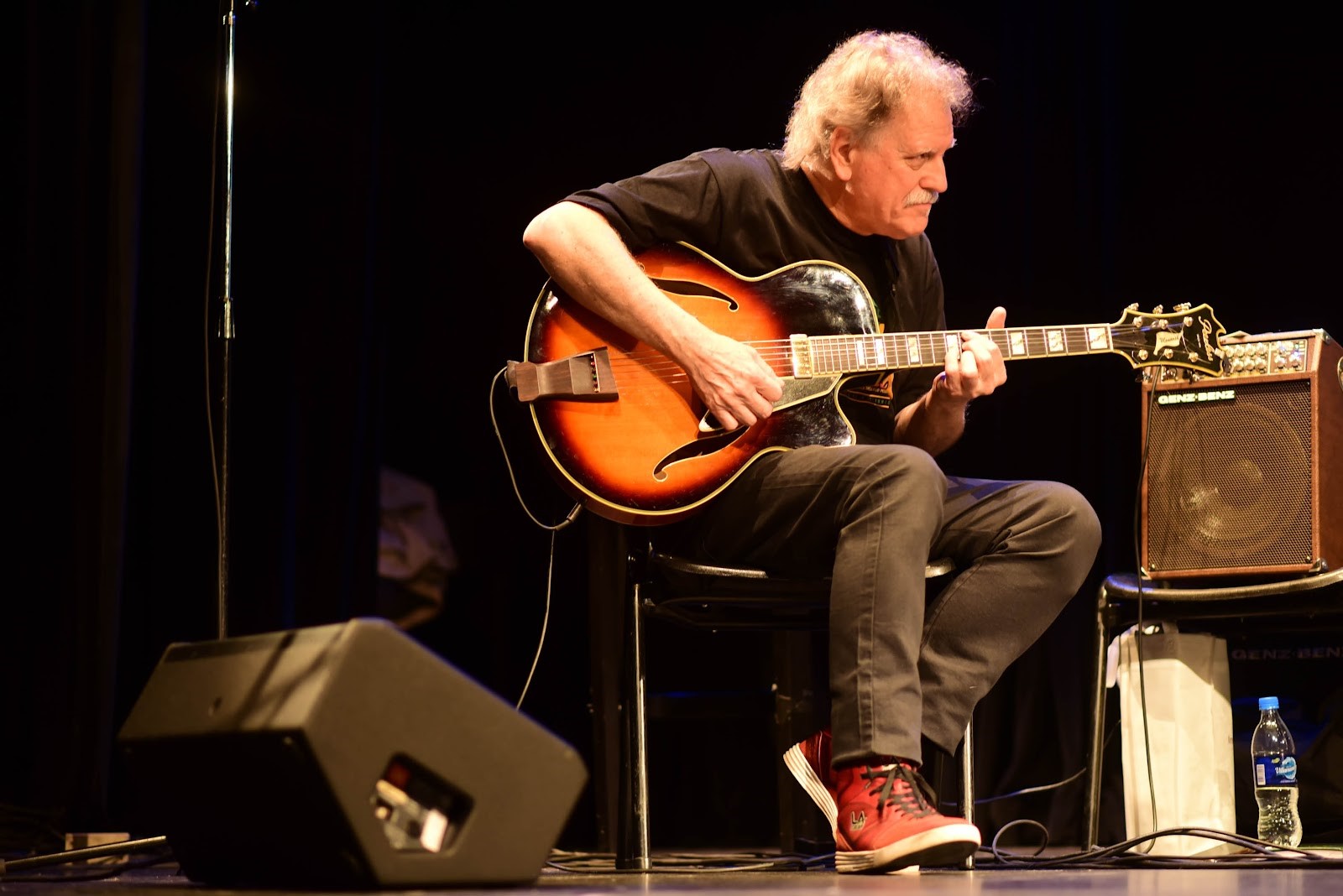
This is how the groups "Cordal Swing", with Sergio Poli and Néstor Gómez for many years (later replaced by Julio Campos), and "Swing Tzigane", with Lito Dalmon and Hugo García, who are still active today, came about.
Cordal Swing
Formed in mid-1985, they played from 1985 to 1988, only performing shows and making no recordings. In 2002 they released "Los Salieris de Django". They played in various bars in the city of La Plata and in jazz circles in the capital.
Sergio Poli (violin), Marcelo Ramos (guitar), Julio Campos (guitar), Walter Erbetta (guitar), Luis Carcacha (bass)
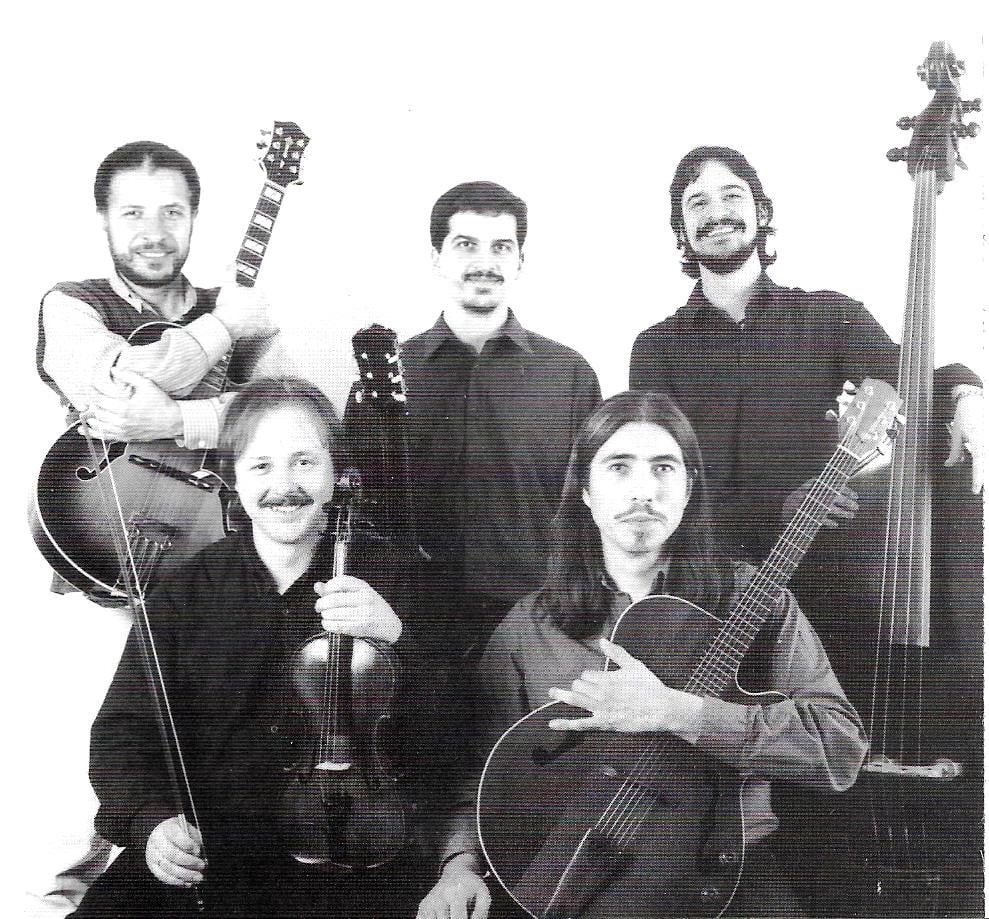
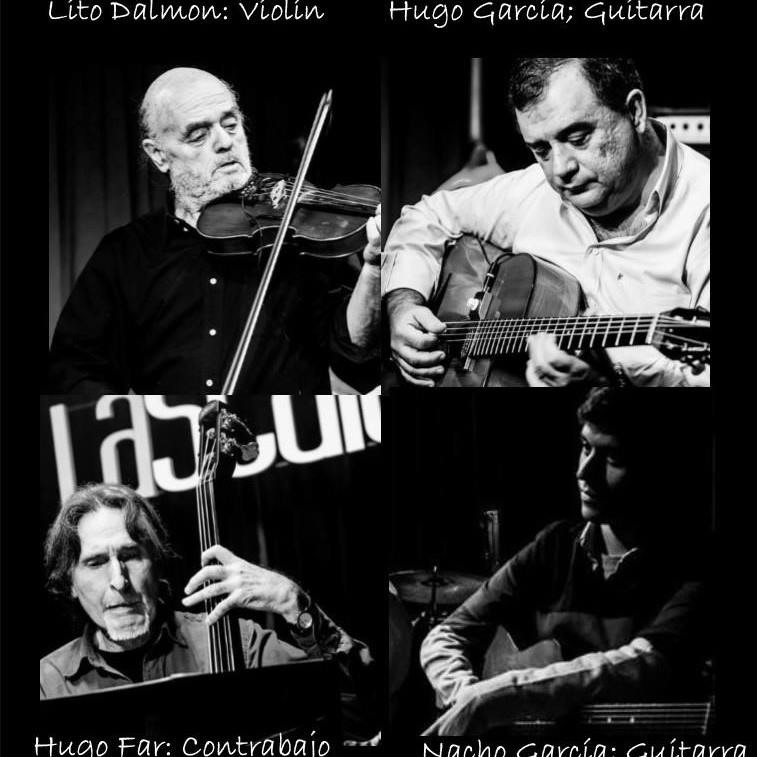
Swing Tzigane
Band founded on December 8, 2001 by violinist Lito Dalmon and guitarist Hugo García, initially as a quintet, later becoming a quartet.
Lito Dalmon (violin), Hugo García (guitar), Hugo Far (double bass), Nacho García (guitar).
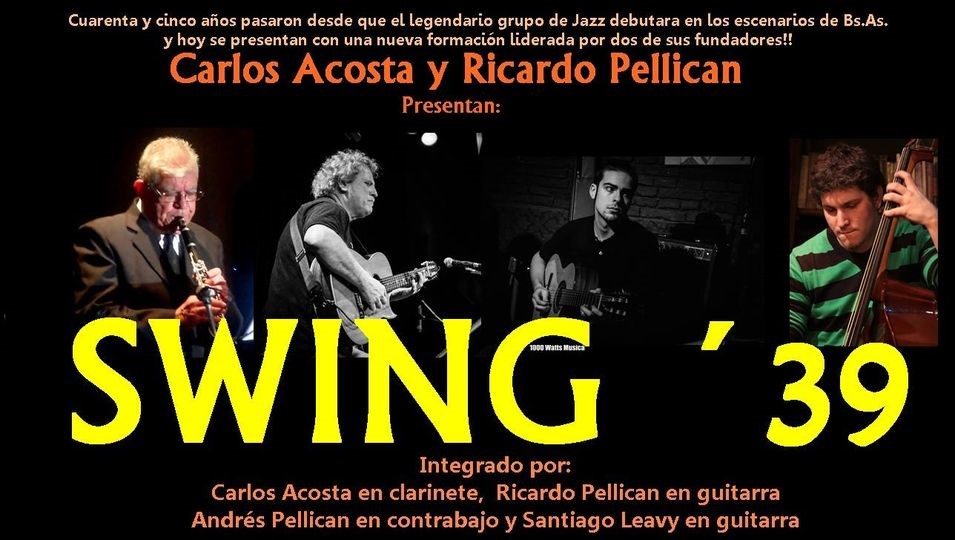
Swing '39 (2017)
Carlos H. Acosta (clarinet), Ricardo Pellican (guitar), Santiago Leavy (guitar), and Andrés Pellican (double bass).
Django Festival Argentina 2003
"Django Trío"
Ricardo Pellican, Walter Malosetti and Andrés Pellican, 1st Django Festival Argentina, 2003.
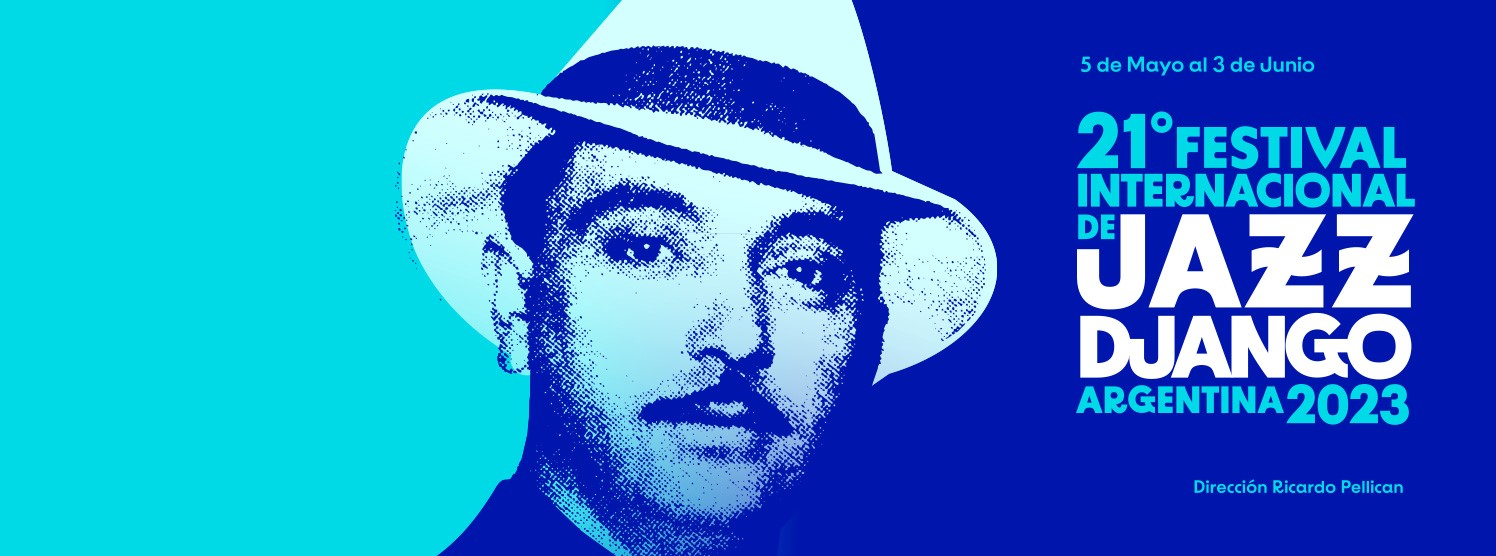
Today, now in the 21st century, there are very many Gypsy Swing or Jazz Manouche groups and soloists in Argentina: the continuing strength and growth of the Festival Internacional de Jazz Django Argentina is clear proof of that, strongly driving the growth of the musical community that enjoys Django's style!
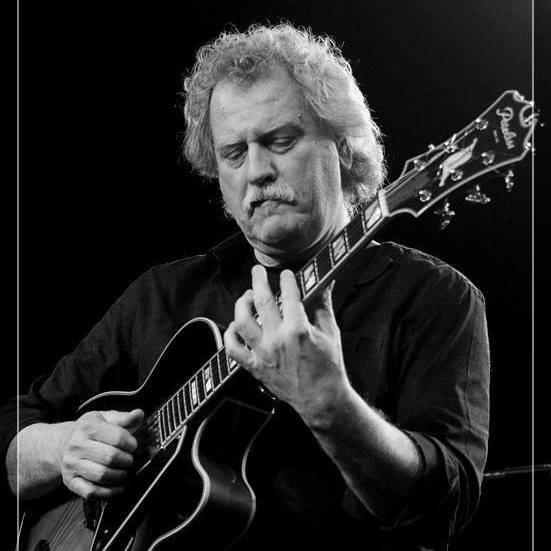
Many thanks to the great Ricardo Pellican: musician, teacher, and to this day the creator of hundreds of concerts, clinics, lessons, jams and places to play.
http://www.ricardopellican.com/
Festival Django Reinhardt Argentina, click here