Gypsy Jazz Online

← Blog

2023-06-26

Stimer guitar pickups and amplifiers

Stimer guitar pickups and amplifiers

Stimer guitar pickups and amplifiers

Jean Guen, was French Radio Engineer that created the Stimer Brand and his first guitar pickup in 1946. These first prototypes were the P46 and R46, and they were followed by the worldwide famous STIMER guitar pickups and amplifiers, mostly popularized by Django Reinhardt.
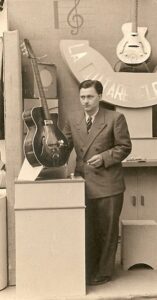

Jean‘s brother, Yves Guen, was the creator of STIMER guitar pickup in 1948, becoming the first french guitar pickup manufacturer.
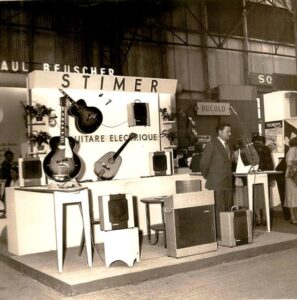
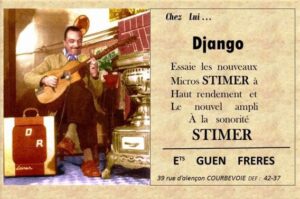
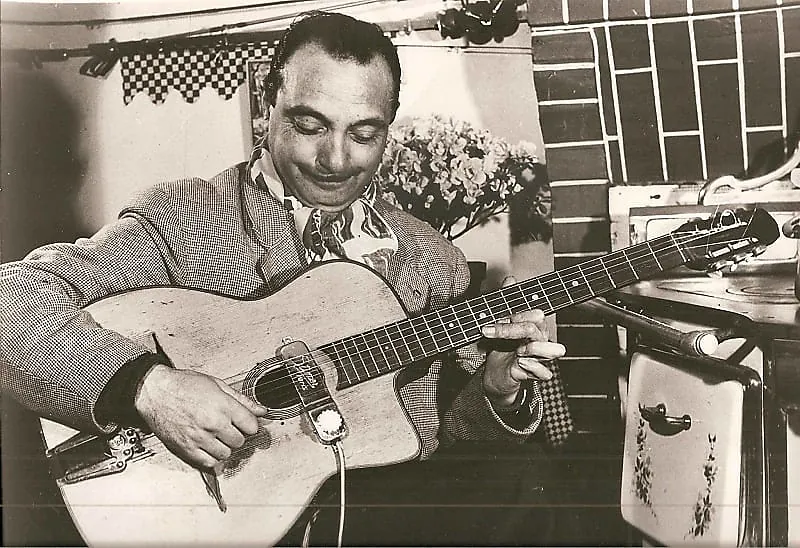
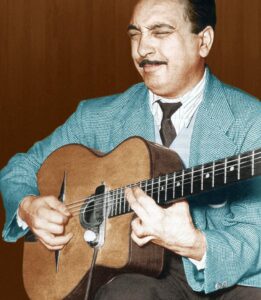
This first pickup, was especially designed for Django Reinhardt, to be used on his Selmer guitar. (this pickup has been copied by several foreign and French brands all these years). Django Reinhardt collaborated for this first Stimer guitar pickup construction.
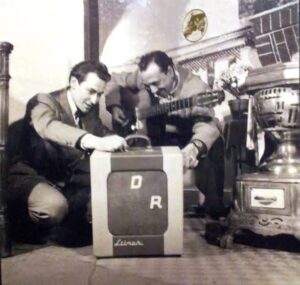
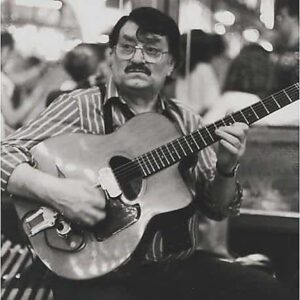
At that time Django Reinhardt, Stéphane Grappelli, Henri Crolla, Marcel Bianchi, Roger Chaput, Les Paul, Barney Kessel among other artists used stimer pickups and amplifiers.

Yves Guen created several pickups, microphones and amplifiers.
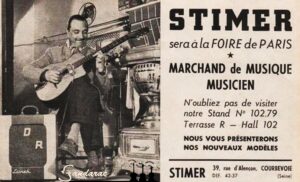
After the ST48, Guen developed several devices:
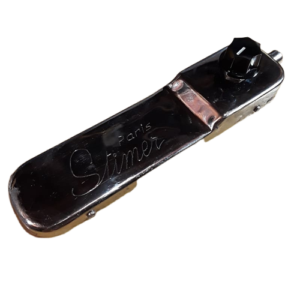
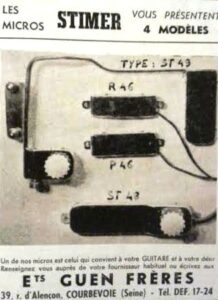
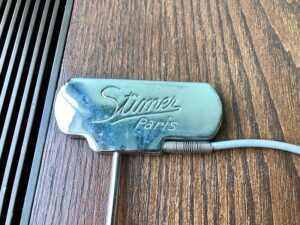
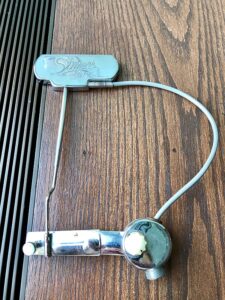
The vintage Stimer guitar pickup S 51 with sliding rod. The famous “Modele Django”, created after Django`s death It slides on two bars between the neck and the bridge, which allows the sound to be picked up at different harmonic positions of the strings.
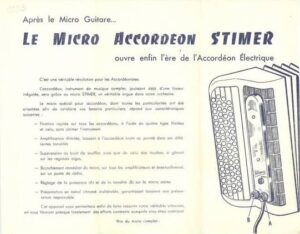
A Stimer accordion microphone.
A studio microphone. A violin microphone, wich was used by Grappelli and many other violinists. The SYG2 for electric guitar The S80. Different electric guitar pickups for Stratocaster and Gibson versions

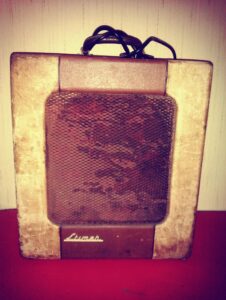
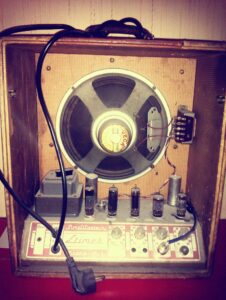
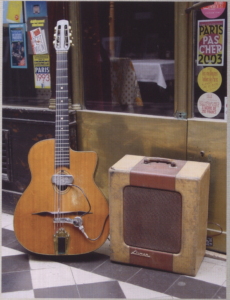
Yves Guen also developed the world famous guitar amplifiers Stimer M6 ​​M10 and M12 models

Which guitar amplifiers were created by Yves Guen?

The A series, the very first Stimer tube guitar amp, which were in a varnished box. The M series with tubes in a beige sheathed box. The Stimer guitar amp models M6, M8, M10, M12. The Special Stimer M12 amplifier with tubes used by Django Reinhardt Nuance and Nuance V. The S series with tubes S11, S12, S13, S17, S17v, S20, S25. The Haarlem series, Aristocrat, the Recording, The Island reverb.

What happened with the STIMER trademark?

In 1986, Yves Guen passed away, and Christian continued the company with his mother.

In 1994, the company went on hold.

Years later in 2004, a luthier (not related to Guen) registered the trademark STIMER to identify guitar pickups.

Since then, Christian Yves Guen, Ive`s Guen son (Born in 1946, France) started using the brand name “Yves Guen Original ” to identify his products, which is the name of the founder of Stimer.

Christian Yves Guen spent his childhood in the workshops of Yves Guen, located in Courbevoie, Maisons Laffitte, then Sartrouville, France.

He personal recalls his starts on his website:

”…It was in this workshop that I made my first microphones at the age of 10 on his advice, at that time we were in Courbevoie. He taught me his methods, his tricks, the choice of components, the location of parts, his method of manufacture, and in summary his know-how to make a good microphone. My knowledge of microphones allows me to tell you exactly what year your microphone or amp is and of course if it’s a real Stimer Yves Guen microphone. As I accompanied my father to all the exhibitions, I built up a large collection of catalogs on guitars and amps from other brands of the time. Many young music journalists come to see me to ask me for information on these brands that no longer exist. Not many of us these days have experienced the beginning of international musical electrification.

After my engineering studies in 1971, I decided to continue manufacturing Stimer tube microphones and guitar amplifiers with him. It was 20 exciting years that allowed me to develop new models of guitar pickups as well as a series of ST7 effects pedals that are very sought after today. I have also developed a range of high power tube amps. Many musicians came to Sartrouville to modify their tube amp, to have a custom sound. This allowed me to have a perfect knowledge of tube amps. We remain faithful to this amplification technology which has no equivalent and I explain why in the M12 amp section, why a transistor amp cannot have the sound of a tube amp.”

(Info: https://stimer.fr )
 

Pastillas y amplificadores Stimer para guitarra

Jean Guen, ingeniero de radio francés, creó la marca Stimer y su primera pastilla para guitarra en 1946. Estos primeros prototipos fueron las P46 y R46, seguidos por las mundialmente famosas pastillas y amplificadores STIMER, popularizados sobre todo por Django Reinhardt.

El hermano de Jean, Yves Guen, creó la pastilla STIMER para guitarra en 1948, convirtiéndose en el primer fabricante francés de pastillas para guitarra.

Esta primera pastilla fue diseñada especialmente para Django Reinhardt, para usarla en su guitarra Selmer. (Esta pastilla fue copiada por varias marcas extranjeras y francesas a lo largo de los años.) Django Reinhardt colaboró en la construcción de esta primera pastilla Stimer.

En esa época, Django Reinhardt, Stéphane Grappelli, Henri Crolla, Marcel Bianchi, Roger Chaput, Les Paul, Barney Kessel y otros artistas usaban pastillas y amplificadores Stimer.

Yves Guen creó varias pastillas, micrófonos y amplificadores.

Después del ST48, Guen desarrolló varios dispositivos:

La pastilla vintage Stimer S 51 con varilla deslizante.
El famoso "Modelo Django", creado después de la muerte de Django. Se desliza sobre dos barras entre el mástil y el puente, lo que permite captar el sonido en distintas posiciones armónicas de las cuerdas.

Un micrófono Stimer para acordeón.

Un micrófono de estudio.
Un micrófono para violín, usado por Grappelli y muchos otros violinistas.
El SYG2 para guitarra eléctrica.
El S80.
Distintas pastillas para guitarra eléctrica para las versiones Stratocaster y Gibson.

Yves Guen también desarrolló los mundialmente famosos amplificadores para guitarra Stimer, modelos M6, M10 y M12.

¿Qué amplificadores para guitarra creó Yves Guen?

La serie A, el primer amplificador de válvulas Stimer, en caja barnizada.
La serie M, con válvulas, en caja beige forrada.
Los amplificadores Stimer modelos M6, M8, M10, M12.
El amplificador Special Stimer M12 con válvulas, usado por Django Reinhardt.
Nuance y Nuance V.
La serie S con válvulas S11, S12, S13, S17, S17v, S20, S25.
La serie Haarlem, Aristocrat, The Recording, The Island reverb.

¿Qué pasó con la marca STIMER?

En 1986 falleció Yves Guen, y su hijo Christian continuó la empresa junto con su madre.

En 1994, la empresa quedó en pausa.

Años después, en 2004, un luthier (sin relación con Guen) registró la marca STIMER para identificar pastillas de guitarra.

Desde entonces, Christian Yves Guen, hijo de Yves Guen (nacido en 1946, Francia), usa el nombre "Yves Guen Original" para identificar sus productos, que es el nombre del fundador de Stimer.

Christian Yves Guen pasó su infancia en los talleres de Yves Guen, ubicados en Courbevoie, Maisons-Laffitte y luego Sartrouville, Francia.

Él recuerda sus inicios en su sitio web:

"...Fue en este taller donde hice mis primeros micrófonos a los 10 años, por consejo suyo; en ese momento estábamos en Courbevoie. Me enseñó sus métodos, sus trucos, la elección de los componentes, la ubicación de las piezas, su método de fabricación y, en resumen, su saber hacer para fabricar un buen micrófono. Mi conocimiento de micrófonos me permite decirte exactamente de qué año es tu micrófono o amplificador y, por supuesto, si es un auténtico micrófono Stimer Yves Guen. Como acompañaba a mi padre a todas las exposiciones, reuní una gran colección de catálogos de guitarras y amplificadores de otras marcas de la época. Muchos jóvenes periodistas de música vienen a verme para pedirme información sobre estas marcas que ya no existen. Hoy en día, pocos de nosotros hemos vivido los inicios de la electrificación musical internacional.

Tras mis estudios de ingeniería en 1971, decidí seguir fabricando micrófonos de válvulas y amplificadores para guitarra Stimer junto con él. Fueron 20 años apasionantes, que me permitieron desarrollar nuevos modelos de pastillas para guitarra, así como una serie de pedales de efectos ST7, muy codiciados hoy en día. También desarrollé una línea de amplificadores de válvulas de alta potencia. Muchos músicos venían a Sartrouville para modificar su amplificador de válvulas y obtener un sonido personalizado. Esto me dio un conocimiento perfecto de los amplificadores de válvulas. Seguimos fieles a esta tecnología de amplificación, que no tiene equivalente, y explico por qué en la sección del amplificador M12: por qué un amplificador de transistores no puede tener el sonido de uno de válvulas."

(Info: https://stimer.fr)


Micros et amplificateurs Stimer pour guitare

Jean Guen, ingénieur radio français, a créé la marque Stimer et sa première micro pour guitare en 1946. Ces premiers prototypes furent les P46 et R46, suivis par les célèbres micros et amplificateurs STIMER dans le monde entier, popularisés surtout par Django Reinhardt.

Le frère de Jean, Yves Guen, a créé le micro STIMER pour guitare en 1948, devenant ainsi le premier fabricant français de micros pour guitare.

Ce premier micro a été spécialement conçu pour Django Reinhardt, destiné à sa guitare Selmer. (Ce micro a été copié par plusieurs marques étrangères et françaises au fil des années.) Django Reinhardt a collaboré à la construction de ce premier micro Stimer.

À cette époque, Django Reinhardt, Stéphane Grappelli, Henri Crolla, Marcel Bianchi, Roger Chaput, Les Paul, Barney Kessel et d'autres artistes utilisaient des micros et amplificateurs Stimer.

Yves Guen a créé plusieurs micros, microphones et amplificateurs.

Après le ST48, Guen a développé plusieurs appareils :

Le micro vintage Stimer S 51 à tige coulissante.
Le fameux « Modèle Django », créé après la mort de Django. Il coulisse sur deux barres entre le manche et le chevalet, ce qui permet de capter le son à différentes positions harmoniques des cordes.

Un micro Stimer pour accordéon.

Un microphone de studio.
Un microphone pour violon, utilisé par Grappelli et de nombreux autres violonistes.
Le SYG2 pour guitare électrique.
Le S80.
Différents micros pour guitare électrique pour les versions Stratocaster et Gibson.

Yves Guen a également développé les célèbres amplificateurs pour guitare Stimer, modèles M6, M10 et M12.

Quels amplificateurs pour guitare ont été créés par Yves Guen ?

La série A, le tout premier amplificateur à lampes Stimer, dans un boîtier verni.
La série M, à lampes, dans un boîtier beige recouvert.
Les amplificateurs Stimer modèles M6, M8, M10, M12.
L'amplificateur Special Stimer M12 à lampes, utilisé par Django Reinhardt.
Nuance et Nuance V.
La série S à lampes S11, S12, S13, S17, S17v, S20, S25.
La série Haarlem, Aristocrat, The Recording, The Island reverb.

Que s'est-il passé avec la marque STIMER ?

En 1986, Yves Guen est décédé, et son fils Christian a poursuivi l'entreprise avec sa mère.

En 1994, l'entreprise a été mise en sommeil.

Des années plus tard, en 2004, un luthier (sans lien avec Guen) a enregistré la marque STIMER pour identifier des micros pour guitare.

Depuis, Christian Yves Guen, fils d'Yves Guen (né en 1946, France), utilise le nom « Yves Guen Original » pour identifier ses produits, qui est le nom du fondateur de Stimer.

Christian Yves Guen a passé son enfance dans les ateliers d'Yves Guen, situés à Courbevoie, Maisons-Laffitte, puis Sartrouville, en France.

Il raconte ses débuts sur son site web :

« ...C'est dans cet atelier que j'ai fabriqué mes premiers microphones à 10 ans, sur ses conseils ; à l'époque nous étions à Courbevoie. Il m'a appris ses méthodes, ses astuces, le choix des composants, l'emplacement des pièces, sa méthode de fabrication et, en résumé, son savoir-faire pour fabriquer un bon microphone. Ma connaissance des microphones me permet de vous dire exactement de quelle année date votre micro ou votre ampli et, bien sûr, s'il s'agit d'un véritable microphone Stimer Yves Guen. Comme j'accompagnais mon père à toutes les expositions, j'ai constitué une grande collection de catalogues de guitares et d'amplis d'autres marques de l'époque. Beaucoup de jeunes journalistes musicaux viennent me voir pour me demander des informations sur ces marques qui n'existent plus. Aujourd'hui, peu d'entre nous ont vécu les débuts de l'électrification musicale internationale.

Après mes études d'ingénieur en 1971, j'ai décidé de continuer à fabriquer avec lui des microphones à lampes et des amplificateurs pour guitare Stimer. Ce furent 20 années passionnantes, qui m'ont permis de développer de nouveaux modèles de micros pour guitare, ainsi qu'une série de pédales d'effets ST7, très recherchées aujourd'hui. J'ai également développé une gamme d'amplificateurs à lampes de forte puissance. De nombreux musiciens venaient à Sartrouville modifier leur ampli à lampes pour obtenir un son personnalisé. Cela m'a donné une parfaite connaissance des amplis à lampes. Nous restons fidèles à cette technologie d'amplification, qui n'a pas d'équivalent, et j'explique pourquoi dans la section de l'ampli M12 : pourquoi un ampli à transistors ne peut pas avoir le son d'un ampli à lampes. »

(Info : https://stimer.fr)